As an eternal nerd, I feel nearly everything I read leaves a mark on me somewhere. Some marks are more noticeable than others. I might notice evidence of a reading in places that no one would likely see, a more private evolution. Other passages and ideas look more like a big scar across my cheek or a limp in my gait. They change me forever.
One such reading is in the Bible, the letter to the Galatians, as Eugene Peterson translates it. (He renders it in more of a thought-for-thought medium, as opposed to literal word-for-word. While I do appreciate precision in language, his work feels much more congruent to the whole, which is why I love adding this version to my regular rotation).
This passage, in chapter 5, verses 22-23 (although the original letter lacked such demarcations), Peterson writes the words of Paul:
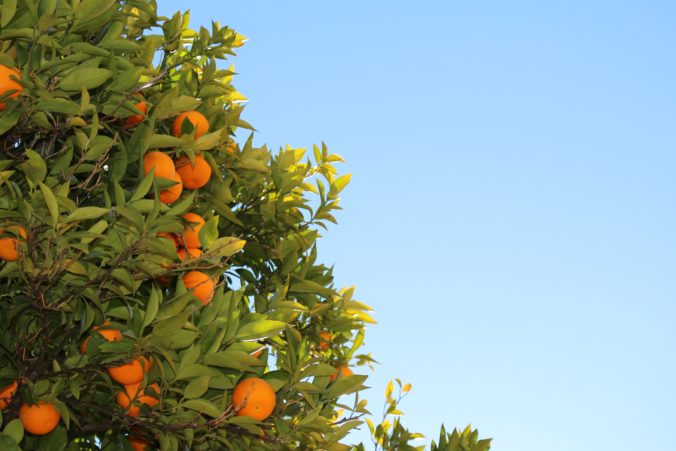
But what happens when we live God’s way? He brings gifts into our lives, much the same way that fruit appears in an orchard — things like affection for others, exuberance about life, serenity. We develop a willingness to stick with things, a sense of compassion in the heart, and a conviction that a basic holiness permeates things and people. We find ourselves involved in loyal commitments, not needing to force our way in life, able to marshal and direct our energies wisely. (Emphasis mine).
This is much more beautiful, meaningful and helpful than listing the one-word Big Ideas of love, joy, peace, patience, kindness, goodness, faithfulness, and self control. At different times in my life, I’ve turned to the above reading and noticed the way God had indeed proven faithful and left the sprouts of such fruit. By and large, I now read it and hunger for the fruit he paints in this picture.
As you might guess from the emphasis I added, there’s a particular element that will continue to show up over and over and over again. A conviction that a basic holiness permeates things and people. Even after years of “Christian Living,” when I stumbled upon this little gem my world was shaken. But rather than a shake like earthquake that destroys everything you built, this rattle was like a trip to the chiropractor that returned my body to alignment.
A conviction that a basic holiness permeates things and people. Living God’s way leads to a recognition that it all belongs to God because it was all created by God. God is in all things. I remember teaching junior high students Ephesians 2:10, “For we are God’s handiwork, created in Christ Jesus to do good works, which God prepared in advance for us to do.” Every student was given a jar of play-doh and ask to create something – anything. As we shared our handiwork, we noticed how the creator’s fingerprints were evident throughout each piece of art. The created bears the mark of the Creator.
If it’s true of each of us, it’s true of all of us. And all things God created. Which, at last count, was every living thing. “Let everything that has breath praise the Lord.” (Psalm 150:6)
This sounds beautiful, but one has to wonder why this became such a game-changer for me. It seems logical, yes? I could probably say that I believed such a theory, would agree to such a creedal statement. But reading this collection of words helped me to change my modus operandi. I didn’t simply agree with such an idea. I needed to live like it was true.
Every single person, place and thing I encounter bears a mark of divinity. The cashier at Meijer has God’s fingerprints on her. The bread that I bake comes from flour, from grains of wheat, which could only grow with the sun and the rain and the natural life-to-death-to-life processes of the seed which God set into rhythm. The trees I walk beside have lived and known God’s presence long before I stepped foot on this earth.
The world is not a group of objects set before me solely for my own enjoyment. Each and every being bears a mark of divinity. To live with “goodness” means to live with a recognition and a respect. I honor my own created goodness. And I look for, seek out, point toward that same created goodness in other living beings.
Yoga finally gave me a word for this: nameste. The light that is within me sees and honors the light that is within you.
This idea, honoring all of God’s created order, is the backbone of the first testament. (And the second, for that matter.) The laws which seem obtuse and irrelevant were God’s way of asking us to consider treating his work with respect. “Eating kosher” considers the cheeseburger abominable, but it is less about the cheese and more about remembering the life of the mother calf and the baby calf that provided the meal. God is ordering us to honor the divine image in that life. For some people, this results in abstaining out of respect. For others, it’s a blessing and a recognition that the meal comes from a place outside of ourselves but bears the same created mark as that which is within us.
In the beginning, God created humankind with an imago dei, a divine image. It remains there, underneath all that we believe we “really are”, the many ways we identify ourselves. Under the good, the bad and the ugly remains the essence of God. Living with goodness means recognizing that in all things and treating them accordingly.