Page 17 of 312

Locked into habits

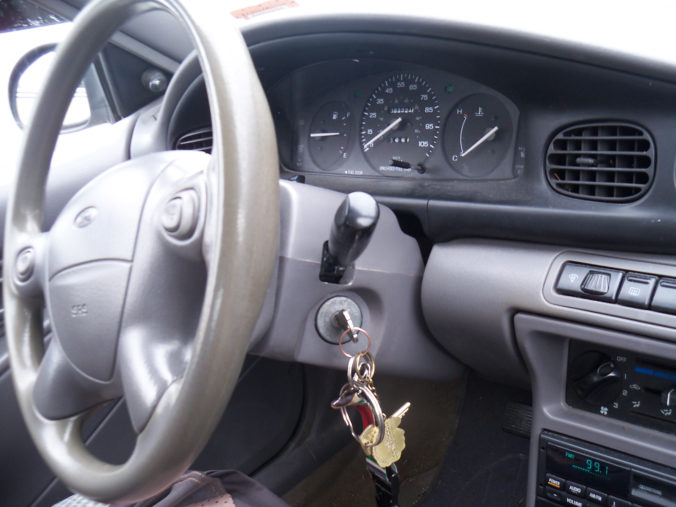
I locked my keys in my van last week. For the second time. When I drove my trusty Odyssey, I cannot recall a single time that I had the keys on the wrong side of the locked door, but in just a few months I’ve managed to be dependent on AAA and a nearby friend to get back in the driver’s seat.

The function of my Toyota is no different than my Odyssey; both have “clickers.” (This is how all people refer to the keyless entry, right? “Clicker?” Related: my family never looked for the “remote control” but rather we had a “flipper” that, you know, flipped through the channels. I have a dialect unique to my upbringing.)

On both occasions of zealous locking, after I arrived at my destination, I put my keys in my purse. My keys have a home in a little side pocket. My habit is to put them into their pocket, put my purse on my shoulder and hit the lock on the door on the way out. I’m too impatient to wait on the sliding doors to shut before using the clicker to lock up.

On the days in question, after mindlessly putting my keys in my purse, I decided I didn’t need the huge bag and only grabbed my wallet. As my door shut, I literally said out loud (on the phone, which is another factor in the equation): I just locked my keys in my car. I knew it before I was 5 steps away.

I’m fascinated by the way our habits serve us. I’m a creature of habit: I love rhythm and order. I complete many of the same tasks, in the same way, each day. I can be in and out of the shower in 5 minutes because I have an order (wet hair, shampoo, soap up, rinse shampoo, condition, shave, rinse conditioner) and it requires zero thought. I can easily pull together a dinner from my top 5 meals (vegetable soup, kitchari, fried rice, chicken soak, sloppy joes)  without giving it focus because my habits serve me well.

Yet there are ways – spaces in our lives – in which our habits don’t serve us. Such as the way in which I’m unable to pull dates from my memory bank because I’m completely dependent on my visual (paper!) calendar. I have taught myself to give zero brain space to times, days or dates because once it’s written down, it’s dismissed from my brain. If you ask, “hey what are you doing next Tuesday? Want to go to London with me to see Adele for free?” I would STILL have to look at my calendar to see if the youngest goes to preschool that day.

So much of the ways we live our lives come down to the smallest tendencies to which we give little thought. The order you run errands, the process of putting kids to bed, how we open a car door and slide into the seat (ask your chiropractor if that one has consequence!).

Sometimes, habits fail us. Our mindless dependency, while advantageous in the broad sweep, kicks us when we’re not paying attention.

How often do we call into question our habits? Not just the way in which we complete tasks, but our patterns of thinking and believing as well? Do we really believe a particular idea, or have we created a habit of thought and operate from that framework? Is that way of thinking still serving us and helping us grow?

What if our habitual thoughts are actually hindering relationships, opportunities for meaningful work, or new experiences? If my starting belief is that anything fun costs too much money (because, for a family of 6, it seems everything costs too much money), then I will continue to shut down on requests to try new activities – and in the meantime, completely miss out on the joy of discovering a new park or finding a trail. The knowledge that things are often expensive for large families will serve me, but depending on that habit to make our decisions will cut us off from experiences of delight.

So in my next moment of frustration, conflict or disappointment, I wonder how it would look to ask what habit am I depending upon right now? What is the underlying pattern of behavior or thought? And if I prefer a different outcome – say, perhaps, to stop locking my keys in the car – what new habit might be formed that could better serve my situation?
Hit ’em in the nose

Several years ago, my dad and his brothers went to a boxing match. It was a kinda-big-deal match and they ended up with seats close to the action (I’m guessing a casino was involved). Not being huge followers of the sport, they were immersed in the excitement, with fans shouting all around them their encouragement on what the fighters should do next. Words like “jab” and “hook” and fancy boxing terms, probably. To join the excitement, and coincidentally at a lull in the noise, my father – proud daughter moment ahead – shouted, “hit ’em in the nose!”

The guy in the ring straight up looked at him.

Since that time, this tale has been told and retold within the extended family and it never gets less funny. Hit ’em in the nose is our solution to dance offs, card games, and toddlers bickering.

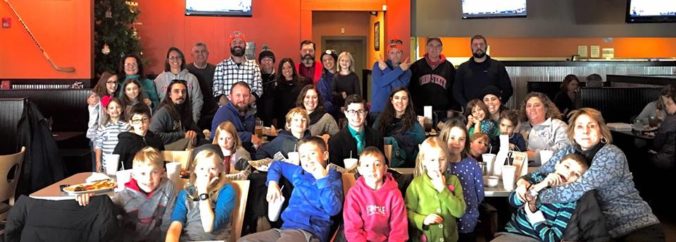
Yesterday, a quorum of Wingfields descended upon the Chiller North hockey ring to support the eldest two of the second generation cousins. It was like a circus car watching families arrive and join the group – we just kept coming. Being B’s senior year and last season, we self-determined to make as much ruckus (a family talent) possible.

While our skills at yelling and making a scene are well-practiced, our knowledge of hockey is rather limited. We took our cues from the parents of the kids on the rink, knowing when to be upset about a call or not. Meaning, when cousin Wendy informed the ref of a missed call for icing (which, btw, has nothing to do with cookies or cake, I’m sad to inform you), I simply yelled, “Yeah! What she said!” You know, because I’m there to show support. The 40 or so of us chanted his number and stomped our feet on the noisy bleachers.

Cousin B had a breakaway moment right in front of our whole family, so we were loudly supportive . Get it! Go! Come on, B! 

You know where this is going.

From the middle of our group… HIT ‘EM IN THE NOSE! Followed by uproarious laughter.

I’d like to make a list of things you should apparently not encourage at a highly-physical sporting event of young men and protective mamas:

1. Acts which require you to drop the gloves.

We learned our lesson after there was an incident of shouting, standing, leaning, talk-to-the-hand motioning, and more words. A mom from the other team responded, “that’s my son out there!”

Whoops.

Now, let me assure you, we are not nasty fans. We are hilarious. We were obvious about our love for our cousin and our ignorance of all hockey rules. We really couldn’t name where the other team was from nor did we really pay attention to the fact that another team was even on the rink. It was the B Show, with some other actors. So we were a tad sorry-not-sorry because, really, can you take anyone seriously when they open with cheers and an Arsenio Hall style “woot woot woot”? The only thing we were bitter about was the numbness of our toes.

One of my kids asked, legitimately confused, why the other mom was so upset. My best explanation was that some people believe that cheering for someone means we’re trying to be mean to everyone else. They mistakenly took personally that our love for one kid meant less love for hers. She believed that love and support were in limited supply and when she operated in that mentality, it was clear that her kid was getting ripped off and our B was getting “too much.”

While I love some aspects of athletics, this, my friends is a dangerous side effect. Healthy competition for personal betterment aside, there’s a real tendency to begin to believe the world only works in Us/Them, Home/Visitors dualities.

Support your kid. Cheer for wins, console for losses. Help them get better, remind them of their worth beyond the game. These are good things.

And can I offer a recommendation? For every hour you spend in the bleachers supporting your team, spend at least 2 hours at a table, reminding yourself that we belong to one another. Put yourself next to others, sharing food and passing drinks and remembering there doesn’t always have to be a “them” for you to experience good things.

Perhaps then you’ll be able to arrive at the field/gym/rink in a place of worthiness, able to appreciate that one of the kids out on the rink is having a memorable day, he’s being loved and supported by family from near and far, and you can just be glad for him. Or, you can be inspired and call up your siblings and cousins and uncles and say, “hey, you know, my kid has a game next Sunday, and though it’s sub-arctic temperatures in the rink, the games are free and fun and he would love it if you came and cheered him on.” And you would get to have day that all your family left saying, “that was so much fun, I love my family, and we should do that more often.”

Who tells your story?

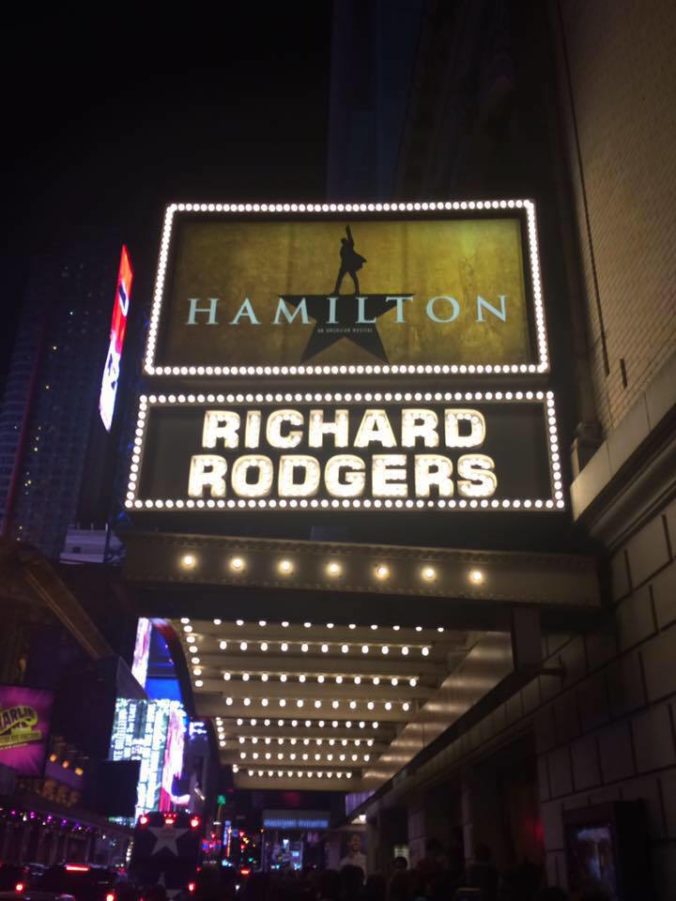
In case I didn’t shout it from the rooftops of social media enough, I married the best of husbands, best of men. He sent me to see Hamilton – I flew out the day after Christmas.

The number one question asked to me is, “was it worth it to see it live?” I mean, if you’ve listened to the soundtrack, you’ve heard 99% of the show. Nearly the entire thing is in song (as is Rent, my other favorite musical I sing to people ad nauseum).

The staging is fantastic and the movement of the choreography makes it worth the ticket price. There’s a hidden character that I’m grateful I read about before I went. The piece is so layered and brilliantly woven that,  as impossible as it seemed to me – having heard and dissected the themes hundreds of times before seeing it – I walked away with a better grasp of (one of) the true questions the story was out to reveal: Who tells your story?

It’s easy to sing, but watching Eliza walk across the stage and explain to the world that she chose to write herself back into the narrative broke me. She told his story, because of love.

Hamilton wanted to Live Big. “Don’t be surprised when you read about me in your history books.” His sense of limited time and limited life drove him to produce and work and drive and create and make change. In the words of 98% of pastors of today, he wanted to “make an impact”. The thought of his legacy drove him toward Bigness.

Yet.

The masses never truly told his story. Wall Street only speaks his name when the news crews are around covering a broadway play. Banks pay little tribute to him. The crowds rarely tell the story, the truest story, the story that captures your heart and not just your numbers.

But Eliza. Eliza. (Yes, I just sang that.) She tells his story. His writings, his soldiers. His heart.

We can do Great Things in this world. We can be World Changers. A Founding Father. A Global Economy Infrastructure Creator. All awesome, much needed. But that doesn’t give you your legacy.

Your love creates your legacy.

Hamilton was far from Perfect Husband (and the show is clear on that one), but he loved his wife and family. And that’s what I packed into my bag to bring home from NYC. You can do everything short of becoming President, and if you don’t love well, it’s not a great story. You can do big, great things for the masses, but if you can’t love the people under your roof, your story is mostly reduced to numbers.

Can I be real a second? Just a millisecond? Let down my guard and tell the people how I feel a second? 

This is hard for me. In the thick of it – convincing toddlers to quietly go (back) to bed or teaching for the 8 millionth time to put things away and treat our things with respect – it seems petty. Miniscule. After the 78th time of interrupting my attempts to put dinner on the table to intervene in a nerf gun war gone awry, I’d much rather turn my attention to the bigger battles of society. Truthfully, I feel like I might make more progress dismantling the patriarchy than my feeble attempts to keep a floor without socks strewn about everywhere. (WHO is wearing all these socks?!)

At the end of my days, even if I manage to cure world hunger, the millions of people fed won’t have my story. It will be told by those who I tuck in each night and by the one who always checks to make sure nothing is in the washing machine. The people who share my table and the deep center of my heart – they will tell my story.

Hamilton convinced me to fill the pages with material for them to tell the best story possible.

« Older posts Newer posts »

© 2026 Michele Minehart

Theme by Anders NorenUp ↑