Category: kids (Page 8 of 11)

Normally Weird

One time JJ and I enjoyed a “date night” solo. Literally, solo. He went to the cinema* to enjoy popcorn and an action flick while I parked my overly pregnant self on the couch to watch the Fame remake. The oldest was still just a babe, asleep upstairs, and the entire movie made me think about the expectations we have on kids. The movie followed teenagers gifted in the arts – dance, music and the like – and the way in which they found an accepting community among other misfits. And once they did, they blossomed.

I wondered about our little one. Would he be the average bear, loving baseball, hating spelling bees and asking for Air Jordans? (Do kids still wear these? He’s been retired for 15 years now. Teenagers now wouldn’t have seen him play in full glory.) Yet, that wasn’t the real question. I was really asking myself, would I accept it if my kid wasn’t “normal” and do what was needed to help him thrive?  Could I be okay with a “weird” kid?

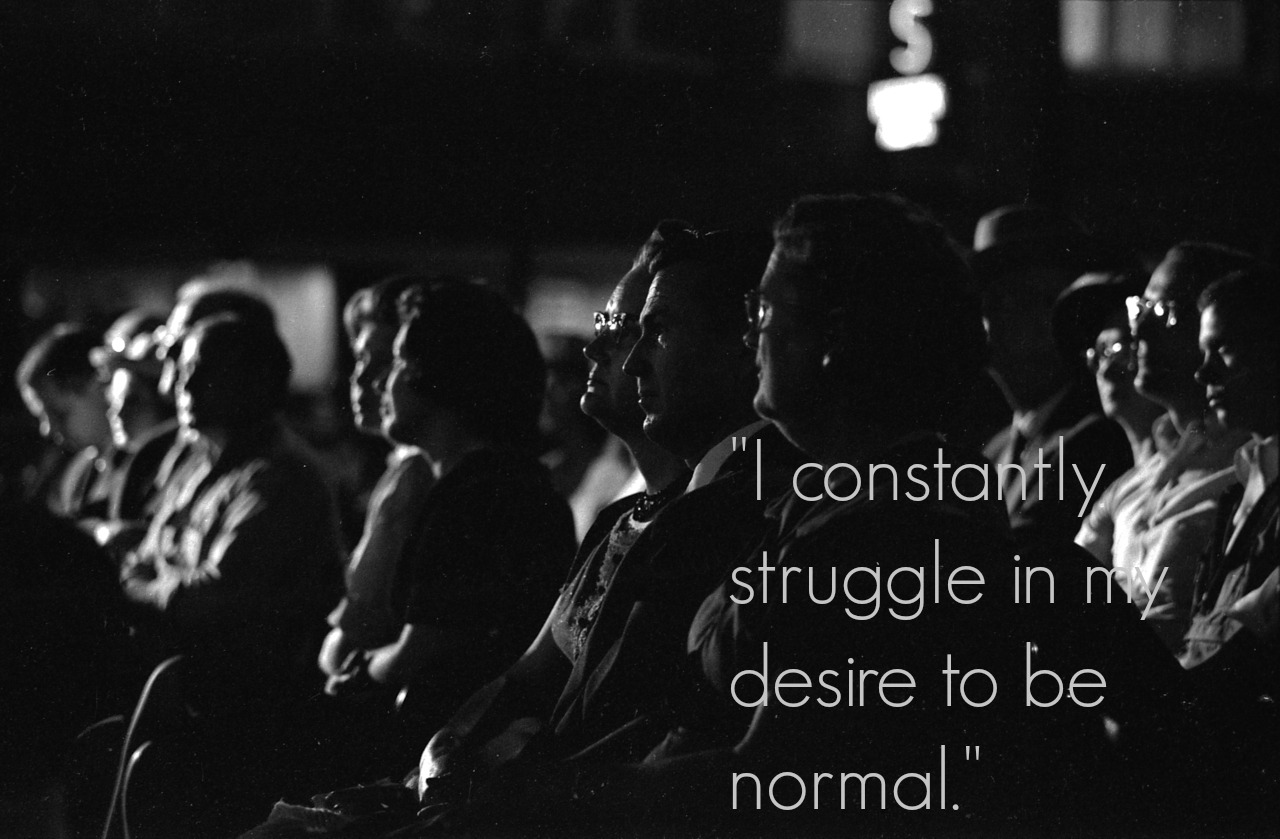
In theory, I wanted a Fame kid. The idea of quirkiness and artistic gifts spoke well to me. How great to have a kid so comfortable in being different my Optimist Self thought. And then Realist Michele sat down to the table and pretty much killed the party. I know you, she said, and you won’t dig it. You’ll look around at the other kids who are normal and wish yours was that way. And she was so, so, so right. She was right, less in a statement of parenting, but rather my own desire to fit in with mainstream life. I constantly struggle in my desire to be normal. I worry that when I let all the crazy out, potential friends or even family will run for the hills.  Normal
I love our weirdish little way of life, I really do. Our way of eating local and whole, albeit breadless, has us feeling good on a regular basis. I’m gleefully happy with our Reggio preschool, which focuses on helping kids develop as a whole person, not just becoming the ideal 5-year-old with perfect letters, even when “he’s not reading yet”. The fact that I work just enough – which means we make just enough money and not a lot more – keeps us humble in such a healthy way.

Yet. And yet.

I hate that part of me striving toward normal: Wishing we had more.  Wishing my kid could eat cake without me squinting. Laying to rest all the worries and apprehensions of sending our kids to public school. I want to stop scheduling and then rescheduling doctor’s appointments to continue delaying a vaccination because he has a rash.

Part of me craves to be normal. To take what is given and be happy. To accept a way of life that works for so many. Part of me really wants to give in and say “it’s fine!” in a way that clearly marks everything is all but fine.

I have several friends who live a very mainstream and very happy life. They are completely content and I am thrilled for them. I want them to be less like me and more happy and content. That’s the goal, right? Happy, content, fulfilled, living out your gifts and calling while surrounded with people you love. So I wish for them to be less like Michele.

I just need Michele to become more comfortable becoming Michele. In all her weird glory.

My eyes have been opened and now I cannot unsee. I taste for something from life that cannot be satisfied with fast food solutions to which our culture defaults. Easier, quicker, more and normal have left me frustrated, empty, disillusioned and lonely. The courage to live that out in the hard places, however, sometimes lags behind the valor I use in my words. “Normal” continues to tempt me toward settling, as if everyone else’s life will be my solution.


*You hear my Brittish accent there, right? The cinema?

Parents, we are making this job too hard

I’ve often considered the fact that my obit might include the fact that I died from filling my 9 millionth sippy cup. The mundane tasks involved with parenting – the shoe tying, the tuck-in-tighting, the stain-fighting, and hair-ponying – should be investigated by the CDC. It’s worse than a sinus infection. The routine, mundane yet necessary tasks of parenting slowly eat us alive. And yet. Could it be possible that we’re making this too hard on ourselves? I have reason to think so. H Boy has been bucking against me in some ways (and he’s wildly helpful in others), which I have taken as a cue to expand the boundaries of what he’s allowed to do. Loosen the reigns, if you will.  In our home, with great power comes great responsibility, so what is asked of him has also increased.

This Beautiful Struggle: It is not what you do for your children, but what you have taught them to do for themselves.

Image via Pinterest, click for source.

On a regular basis, he is making fruit salad and guacamole when the menu requires it. (Many thanks to Miss Melissa at The Overfield School for teaching proper knife skills!) He takes out the trash when the receptacles are full and helps gather all trash on Thursday nights. Note: a week ago I was firmly reprimanded for refilling the trash bags in the kitchen. “That is my job,” he yells. I explained I was only trying to be helpful, but he told me that in the future, I can replace the bag on the black trash can, but not the white one – that’s his job. As helpful as the trash-taking is, that really falls under JJ’s branch of household responsibility, so I had yet to reap the benefits. However, last night I welcomed the little helpers into my world. I had both big kids completely clear the table and put away items, including leftovers into proper containers. And it was taco night, which means that’s kind of a big deal. We put leftover refried beans into a jar, scooped peppers and chicken into our glass version of tupperware and placed the sour cream, guacamole and shells back into the refrigerator.  They carried every single item from the table to where it needed to go. They even wiped down the table. And guess how many moans and groans I got? Zero. NONE. They LOVED playing a role in the process. What started out of necessity (people coming over very quickly after dinner) ended in new expectations. We, in our adultly wisdom,  think such chores are, well, a chore. But children seem to believe that by including them in the natural jobs of running a home, that we’re actually including them as a significant contributor. And they are! I didn’t need to hover over the leftover-saving as I had my hands in dishwater for the 3412 time of the day. Sometimes we inadvertently believe that “it’s quicker to do it myself” but I say, No! No it is not! While I could probably beat them in a bean-scooping race, it was still quicker because I was doing the dishes instead of scooping beans. When we begin to believe that we’re raising capable children, doors and even windows open so much more frequently. Not only is stuff getting done, but the kids feel valued. They love contributing and showing off their work. They want to be helpful. They want to be included. Why not foster that now, when they crave it, rather than battling it in the lazy teenage years? Parenting is hard enough from a social and emotional standpoint – why do we believe we should bear all aspects of the physical work involved with family life? Why should we die the sippy cup death when they can fill their own water from the spigot in the refrigerator? Now I’m looking at our home life with new eyes. What else have I believed them to be incapable of? How can I give them the lead on specific tasks? Tell me, good readers, what chores do your children thrive with? How do they contribute to their homes?

Creative genius

Last night at dinner we experienced another milestone marker with H boy. Like every good restaurant, Smoky Bones provides kids with menus and crayons so to pacify them for a whole 8.2 seconds. As soon as we doled out the goods, H & M got to work decorating the placemats. For Miss M, that means massive large scribbles. As I looked at H Boy’s, I noticed he’d colored in one of the shapes. In alternating blue and yellow stripes. 

Thanks to a lack of visually creative mother, my kids have been afforded a large number of crayons and blank paper, but very little actual direction when it comes to the fine arts. (*We also have glue and scissors. And pipe cleaners. Which I have no idea what to do with, but I thought Pinterest would tell me to buy them). For my only crowd pleaser, I traced my hand. Fanfare, I tell you. We’ve traced hands for nearly a year. 
So when H Boy randomly broke out coloring inside the lines with a striping scheme of rhythmic nature, I asked JJ, “where did he learn that?” Our only guess is our fancy-dancy preschool, with a focus on nature and arts. It clearly wasn’t us. 
Not my child. Or picture. Thanks, Stock Xchange! 
The irony of it all lies in the fact that I’ve been enamored with pro-creativity reading (currently: The Element); I took the “color outside the lines” pill and swallowed it whole. But when H Boy showed capacity for actually coloring in the lines, I did an inner dance of joy. No longer did he seek just to make a swirl of color, happy just to watch the as the wax found its way to the paper in the same way his hand moved. 
I stand behind my inspirations to foster my children’s creativity by exploring interests and giving freedom. But as H Boy colored inside the lines, I learned that he needs more than freedom. He needs tools. My art teacher friends might say that I need to be exposing him to things like line and texture and color (in a simplistic form. Come on, he’s only 3) as a way of teaching him how to begin a composition. Tossing him a bunch of supplies and saying “have at it!” will likely yield the mess we all think it will. (Note: it does.) 
I’m learning from the professionals. A good teacher follows the lead of a student’s interests while helping to prop up his arm while they get a good grip. Learning isn’t completely hands-off; creativity isn’t the result of happenstance, but continued exposure to looking at the world from different angles
A good teacher isn’t afraid of a little mess en route to a discovery. But she also doesn’t hesitate to share some “best practices”such as, this is how we keep from dripping paint across your picture. Things don’t need to be right or wrong for them to be good. 
The evening provided me a teaching moment. Structure and instruction can lead to creativity. While there’s no need to introduce him to “that’s wrong” or “not like that” (the world will do that soon enough, yes?), we can offer “you could try” and “watch me for an idea.” Creativity needs more than just opportunity. It needs inspiration. 
« Older posts Newer posts »

© 2026 Michele Minehart

Theme by Anders NorenUp ↑