Page 85 of 312

Stuck in the Mud

Every year, my grandpa Bill gave up watermelon for Lent. Such a sacrifice, being back in the day when out-of-season fruits seldom sold in the grocery store. So I started mentally composing a list of things I could possibly give up for Lent way back in January. It contained things like “cooking breakfast” and “laundry.” As much as my grandfather was a wise, wise man… it slightly misses the point.

I have grown to love the Lenten season. I have the emotional make-up to thrive on these kinds of situations – give me a goal, let me attach meaning and see how far I take it. I was challenged my junior year of college when I gave up coffee; my world was rocked when I kissed goodbye to hot showers for 40 days (and not a day more). I took a hiatus through most pregnancies – to be honest, I felt like I had sacrificed enough of my diet and physical space for the time being. 
This year, however, I’m back to it. A friend who is trained in Ayurvedic health gave me a brief lesson on the seasons and how a spring cleanse can bring wellness to the body and soul. Though it’s based more on the elements and the rains of the spring, the philosophy is the same – lighten yourself for a period of time to become more focused on your intention. 
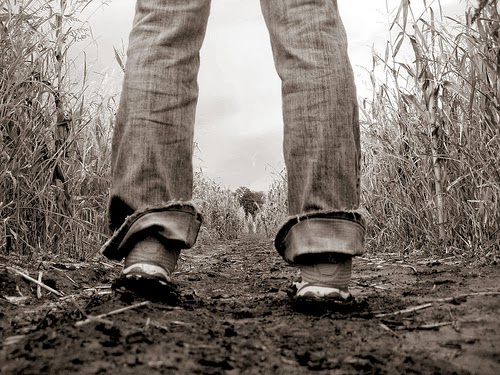
She gave me a visual: often in the spring we find ourselves stuck – all that rain and snow melting off brings a wetness and if we’re not careful, we get stuck in the mud. The process of lightening and shedding makes it easier to get un-stuck.
For me, so it goes with Lent. Sometimes we simply find ourselves digging further and further in a pile of spiritual mud, rocking back and forth. Lent, with its focus on the discipline of fasting, makes it possible to try on something new and for 40 days forces us to explore new habits. 
I read an encouraging blog post about what to “really” give up for Lent – things like comparison and fear of failure and self-pit. While I like these things, they fit better as the result of a successful fast, not the “thing” you’re fasting from. Giving up bitterness and resentment rarely works because nothing forces us to face our addiction to it quite the same way as turning down our favorite cup of joe. 
A Jewish mode of operation includes the idea that if you practice something long enough, even if it doesn’t have purity in meaning, it will eventually become significant. (I could write a whole post on this topic – save those questions for later). While the approach often gets flogged in contemporary evangelical grace-filled culture, I believe it to be true and a powerful tool in our spiritual toolbox. Not the only one, but as significant as a hammer – and just try to build a house without one. 
So Lent, and any practice of fasting, helps us build a habit. You might not always pray instead of drink Pepsi but the habit of denying yourself of something you want and enjoy builds into a lifestyle of appreciation and gratitude. Sometimes it’s good to feel in your body just how powerful a hold an object can have over your physical self. 
This year, I’m going with the overdone social media. Yes, this will be a tad tricky as it is my job. However, I think I’ve found some workarounds. I’m focusing my fast toward my actual FB feed – the news of my friends and all of their cat pictures. I can still log in to check my little red flag for work-related tasks as well as connect with friends, because I do believe social media has a positive force in my life in that regard. I stay at home all day with kids – I need every avenue possible to conversate. It’s not feasible for me to “meet someone for coffee instead” so I’ll continue to field messages. 
I will turn off the push notifications on my phone so that I can begin to break myself of the need to check while in transit. I will tune into social media at my own will, not at the will of a red flag. I’ll also be allowing blog reading, so you may see me post things I find interesting. In preparing for my Fat Tuesday, I asked “What do I need to consume less to create more*?” which was a fantastic guide to how I want social media to fit in my life over Lent. I want to consume less meaningless info about other people while still maintaining connection. I want to read more and think more and (hopefully) blog it – create – more. 
I’ve become stuck in knowing what’s going on in others’ lives and I want to be free to create more traction in my own. I’m still praying through if there’s a food group that I’ll deny myself, though I’m likely to self-justify that I pretty regularly turn down favorites and don’t feel a strong pull in that direction. But as I mentioned, there’s power in the physical force of change, so if I want to feel the full force, I might still come up with something. 
What about you? I would love to hear what you need to consume less to create more. I’d love to hear the action you’re taking to step outside the normal rhythms and try on new habits that shake loose the bindings of our physical world.

*Thanks, Paul for that one. I’ve asked myself every year after your sermon on this. 

The Original Comfort Food

Somewhere on my resume I need to include under “strengths” my ability to lactate. I now have the prerequisite “3-5 years experience” which would qualify me under a professional title, yes? And in those years of experience I’ve noticed trends. Notably is a small child’s attempt to eat even when s/he’s not hungry.

Take, for instance, a few nights ago when Baby M woke 4 times between 11:30-4. Of course, he refused to go back to sleep without a snack. My current style of parenting finds that snacking gets me back to sleep quicker than crying, so he enjoyed a few midnight snacks. But I. Was. Tired. 
The boy finds himself in a mean streak of teething and mama seems to be the best form of comfort. He doesn’t need food, he needs love and to be understood that yes, this sucks, you are not alone and I wish I could help. While all of those things are true, he doesn’t know how to experience them without something as comforting as a full belly. 
While it’s easy to blame evolution for my penchant for an evening nosh, we may have unknowingly stumbled into a habit of mistaking a full tummy for a full heart. And now the two things seem so easily interchangeable.

Perhaps this is why a fine banquet or dinner out has become so desirable – we cannot help but delight in the tastes of a delicious dish while enjoying company and conversation. It’s why eating alone becomes an acquired skill some feel shamed in adapting.

Food seems second nature to company, they come one with the other. And in our desire for one, we regularly get the other. Which means in our desire for one, we often reach for another. Perhaps, much like my 8-month-old, we don’t know if we need something to fill our heart or our belly. 

No one puts baby in the corner

Note: I found this gem in the archives and thought I would share. It’s a few years old, so I’ve not resumed using a sitter and the eldest hasn’t magically reverted to 3 years old. 

A few weeks ago, upon arriving at pickup from the babysitter’s, H Boy darted out the door quicker than I could say hello. The sitter informed me that he had to spend some time in the corner that day for not listening and not being especially nice. While I do recognize he’s 3, I still left with a sense of failure. MY kid was being disrespectful?

Days later, as he was trying to convince me that he had acted in a way deserving of watching a movie, he dropped it that he had “Spit in Michelle’s [the babysitter] cup”. When pressed for why he would do such a thing, he told me that “she said no.” He was sent to bed without a movie. Thankfully, upon further investigation, the incident was around a toy cup, not the babysitter’s mug of coffee. A fortunate turn, as I’m simply not that prepared to take on the vileness of outright obstinate behavior .

But the experience of mothering a 3-year-old has allowed me to dip my toes into thinking about sin and the age of accountability and fallenness and grace and imperfection. I’ve mentioned before that I’m a Formula and Process girl. Nothing wins my heart like a good “If / Than” clause. And though I can cerebrally tell you that parenting doesn’t fit into that framework, you’ll still catch me trying.

While I realize perfection is slightly out of reach, it doesn’t stop me from wanting to raise good kids. And not because I feel like it would add a few credits to my Good Person account. God will love me no more (or less), no special seating privileges at the pearly gates, not even promises of earthly rewards. So I required a little soul searching for why I was completely appalled regarding the Cup Spitting Affair. Why do I want good kids? Why does anyone want good kids?

Perhaps the promise of ease plays into it. No bailing anyone out of jail or dealing with other Bad Kid ramifications like going to parent teacher conferences. Maybe I believe that good kids are less work, which appeals to my general inclination toward laziness.

Or I believe that if I raise good kids, they’ll automatically have good things happen to them. They won’t be stricken with cancer or loose their job or have rough patches in their marriages. Maybe I believe that good kids become Good People and nothing bad happens to good people. Right?

I could want good kids because I somehow believe that good kids equate to sinless kids, thus by being good, they’ll be spared the expense of pain and consequences that come with sin. And that’s just incorrect thinking.

Mostly, though, I believe I want good kids because it reflects my ability to parent, as if I’m doing something right based on their behavior. Which is absurd. I can no more control another human being than I can the weather. However, I somehow equate a cup-spitter with a poor mom.

The logic applies to hurting and hurtful people and their God. He can no more stop them from hurting others than I can keep a boy from spitting in a cup. So the pain we see in the world isn’t a reflection of God, it’s a reflection of ourselves and our inability to understand how our actions effect others. God wants more from us and does hold us to a higher standard, but short of explaining the expectations and providing a consistent and worthwhile example, what’s He to do? The “pain in the world” argument against the existence of God doesn’t hold any water with me. God isn’t failing in that department, we are.

« Older posts Newer posts »

© 2026 Michele Minehart

Theme by Anders NorenUp ↑