Page 73 of 312

Jesus and Preventing Babies

Fact: I never went to law school. I have, however, read a large number of John Grisham books, which is kinda the same thing, yes? Ok, not really. What about those Law & Order reruns I became addicted to my freshman year of college? Certainly those count, especially when they’re “based on real life events”?

Now that we’ve established my credentials on posting about a Supreme Court ruling, let’s also bring out my achievements in the world of health care. Like the fact that I hate it. If health care insurance companies showed up at my party, I would politely ask them to leave or, at the least, I would spit in their food. In general the American health care model of all forms has made my life miserable.

And now, on to Christianity. Ding ding ding! A winner! I’ve got a degree in that. I’m pretty well practiced when it comes to loving Jesus. I even have a pretty good grip on my Bible. So allow me to direct you to the chapter and verse where it says we should make all healthcare decisions for one another because we value life. Just let me find my Greek and Hebrew concordance. It’s around here somewhere…

I fully support the right for businesses and organizations to exert their “personhood” and I don’t believe they need to foot the bill for products and procedures which oppose their values. Catholic institutions have been doing it for years (and I believe their success lies in their consistency – they didn’t get all picky-choosy, allowing the pills yet leaving out the IUD). Yet I would ask Hobby Lobby to think again. They can continue to make their personal healthcare decisions based upon their view of when life begins but enforcing it company-wide might not be the best form of proselytization.

My Christian Ethics class, and professor, taught me that our ethic should inform all areas of our life, parts that seem unconnected. Small things do matter and if it matters, then we should live it – kudos to Hobby Lobby for wanting to remain true to something they identify with as wrong. However, that course also taught me what seems the obviously right choice might not take into consideration the very people whom Jesus spent his life ministering to – the poor, the sick, the disenfranchised and the unreligious. Jesus had very high ethical standards for the religious elite; for the common folk, he tended to speak with words of grace and compassion before jumping to behavior modification.

In fact, we can see in Jesus’ stern words to the priests and Pharisees in Luke 11 (verse 46) – “And you experts in the law, woe to you, because you load people down with burdens they can hardly carry and you yourselves will not lift one finger to help them.” This came in a whole series of harsh remarks toward the religious ones. I think if you want to wave a religious freedom flag you have to put yourself into the category of “religious” when it comes to Jesus’ teaching. These warnings are for us, the ones who love our religion.

We the religious tend to take our stand against something, anything, to differentiate ourselves. But in taking a stand against issues, we’re creating distance between our values and the people we’ve been directed to love. “Us and them” is the very language Jesus opposed; you can see throughout his life and ministry he wanted people to begin to understand that all of creation belonged to God, not just the ones privy to the ancient texts and their meanings.

I don’t love Hobby Lobby’s policy because it rejects the only form of birth control my OB will allow me to use (the copper IUD is the only non-hormonal option) and if I’m in that boat, surely others will be as well. It’s not “my right” that an employer cover every health care need (more on our poor view of health insurance later), but to feel singled out and even accused of moral shortcoming because of it and using Jesus as the reason, makes me uncomfortable. According to this, in order for me to remain un-pregnant, I am un-Jesus-like and practicing something on par with abortion. I’m not sure that’s the message Jesus would want to give women.

I also don’t love how again the fellow Christians have responded in outright support of such a decision simply because it’s “Christian.” Which leads to the division it creates, a direct opposition to the way of life for Jesus. (You want to come at me with the the “I come with a sword” and division of family verses? Bring it. Post forthcoming.) Any time we the Christians want to exert “our rights” I have to wonder at the expense it comes. The cost may be the invitation for a civil chat at the table about issues that matter because we’re all the time yelling about our beliefs, unable to listen.

I have to wonder how Jesus would deal with issues of reproduction and health care and working. How would He love all parties involved? How would he consistently point toward God and reveal our own selfish tendencies when choosing a “side”? I can’t think that he would vilify anyone but those who use religion to their own advantage (because that’s how he dealt with most issues in the Gospels).

And I’m positive he’d be cool with the IUD.

Get thee to thine Farmers Market. (It’s for the Children.)

When we moved here nearly 3 years ago, the first thing we did on the first morning in our new town was visit the Farmers Market. I fell instantly in love. Great veggies (we moved in late July, so the everyone had a great spread), the Leaf & Vine had a “Champagne Brunch” which I instantly imagined our life in 10 years and JJ and I actually getting to go, childless. I came to a tent with the Stone’s Throw Market banner and they had Snowville Creamery milk, a farm from the greater Athens-ish area. Swoon. By winter we joined the co-op and came to depend on their organic dry goods, fresh butter, grass-fed meats and free range eggs.

Today I made a quick trip to pick up my 700 pizza crusts I ordered from Mosquito Creek Farm and was saddened not to see that same white tent filled with jams, granola, milk and eggs. The co-op dissolved this past May because the membership didn’t put forth the energy required to move into a new store and grow. While member numbers were high, shopping numbers were low. We were a group of people who believed in local economy and farmers market foods, we just weren’t a group who used our money to show it on a regular basis.

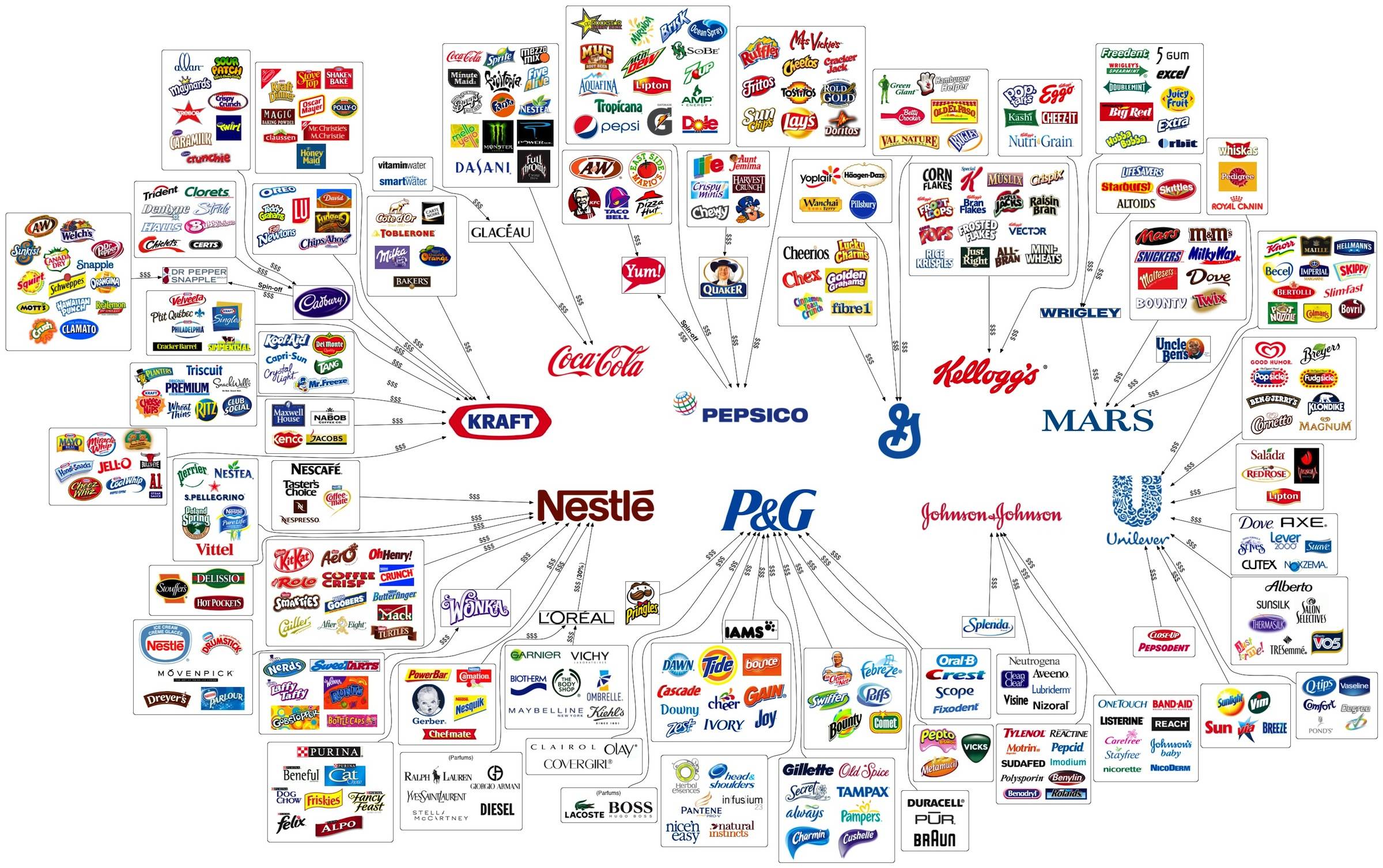
When we don’t buy directly from a farmer, we likely instead purchase from the same group of products. For instance (note this source is from June, 2009. This has likely grown):

This chart is specific to if you tend to enjoy organic “health” foods. If you’re a mainstream shopper, there are a few more.

Source

Even when you buy organic, it seems that our dollars go to support the same major players of our food supply. Even worse, many of the food we see on the lists above get their raw ingredients from sources that utilize one major player of our food system – crops grown from seed via Monsanto. (So, while Monsanto doesn’t “own” these companies, there is a significant interest in the food economy).

Why do we care? Well, some don’t, and that’s fine. But it seems that this major distributor of goods that goes into nearly all of our food doesn’t want to tell us exactly what’s happening at the seed-level. In order to keep things covered, the company is willing to sue the state of Vermont because it’s about to impose a labeling law to give consumers full disclosure about not only what is in their food, but what has been done to their food before it was put in the package.

Apparently Monsanto has more money than the State of Vermont as it seems to be going this battle alone. Previously, Monsanto won a battle over labeling in California in 2012. That time it partnered with some of the above companies for campaign funds – “The “Vote No” campaign’s biggest supporter was Monsanto, who threw more than $8 million themselves into efforts to defeat the measure. Dupont, Pepsico, Bayer, Dow and Syngenta were also big funders of the opposition, each contributing at least $2 million apiece.” (Source)

The amount the grassroots believers had to to use to get the word out? A total of $8 million, against the $45 mil the big companies put forth.

All of this to say, there is a lot of money in food. A lot. I know in our budget we give more to groceries than our mortgage (though, admittedly, we have a below-average amount owed on our home).  But when we decide to spend our money at the grocery rather than the independent baker, farmer or butcher we are giving money to the same people over and over and over. If I believed in their general goodwill and concern for the health of my children and yours, this would not be a problem. However, I tend to believe that the topic of conversation in the boardrooms and laboratories always goes to the bottom line with out much question of “is this proven safe?”

I’m currently buying goat milk for Sir M from a family farm. We facebook each week about when I’ll be picking it up. They give me fresh baked bread and a free dozen eggs, collected that morning, when they have some around. But more than that, when I started giving it to the baby they would message me to ask how the little guy was doing, if he was adjusting well and offered some tips. There is an intrinsic, unprice-able benefit to knowing the person who is feeding and raising your goats.

Buying food directly from growers – specifically ones committed to non-GMO farming practices – is my best attempt to rectify a broken food system. There is too much money and power at play for me to believe that I can simply believe that my interests are being considered.

If you want to hear this from the voice of an analyst, then perhaps consider this:


Who wears short shorts?

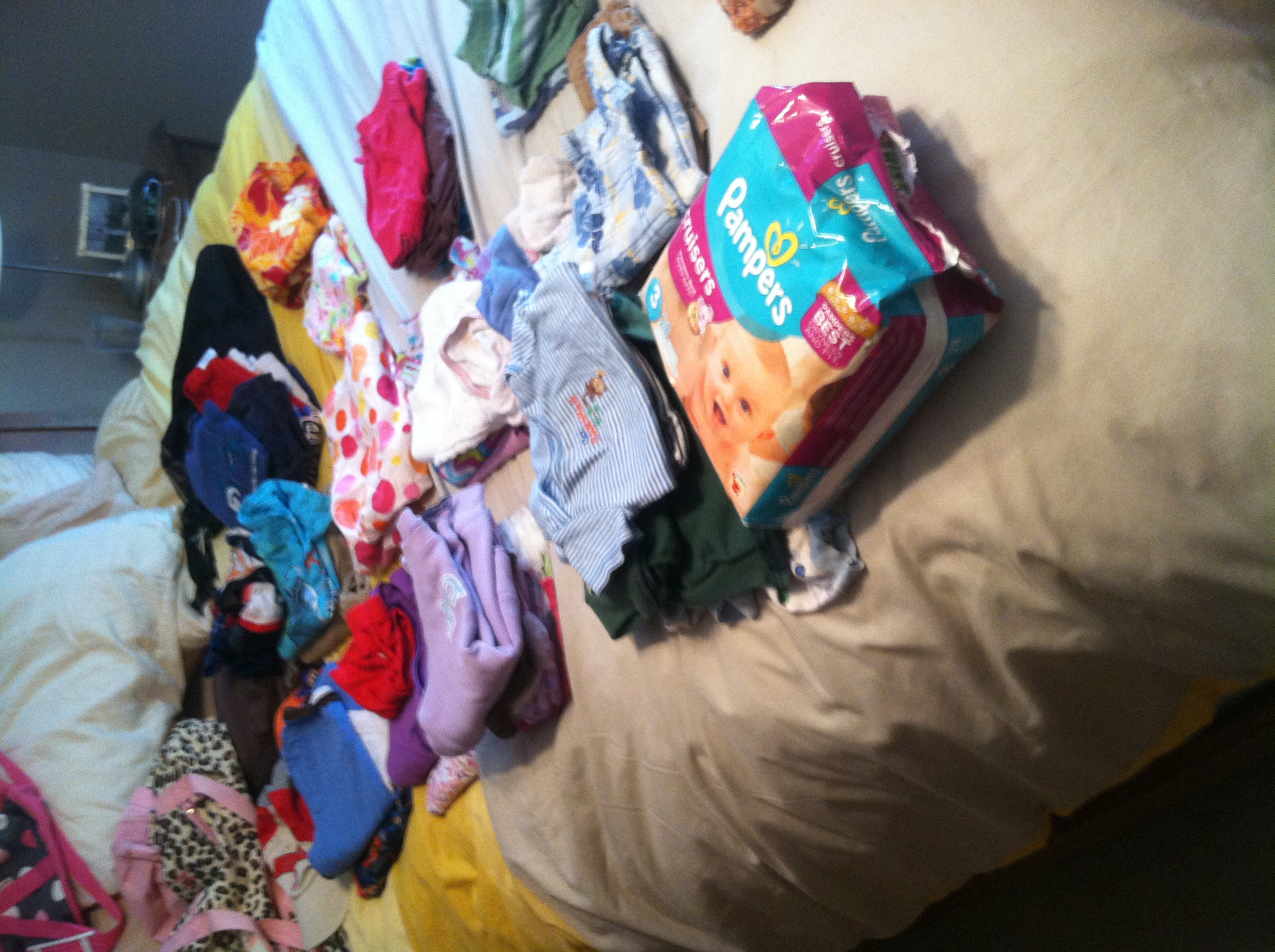
Packing for 4 for any length of time can be quite an event. While I am quite practiced at it and each child has a bag and they even help me gather the necessary items, I have found the best approach to be to pack on a grid: types of clothes in a line for each kid.

Pack on the grid

And while I check and double check, invariably someone arrives without a swimsuit, underwear or seasonally appropriate shirts. I’ve accepted it as my lot in life .

So when I dug through 3 baskets full of clean clothes and couldn’t find a single pair of shorts for Baby M, frustration arose. Digging, digging. Aha! Yes. When he ends up without pants, it will be a surprise, not because nothing is clean.

Then I realized they weren’t his shorts. They belong to the (nearly) 3-year-old daughter.

Short Shorts

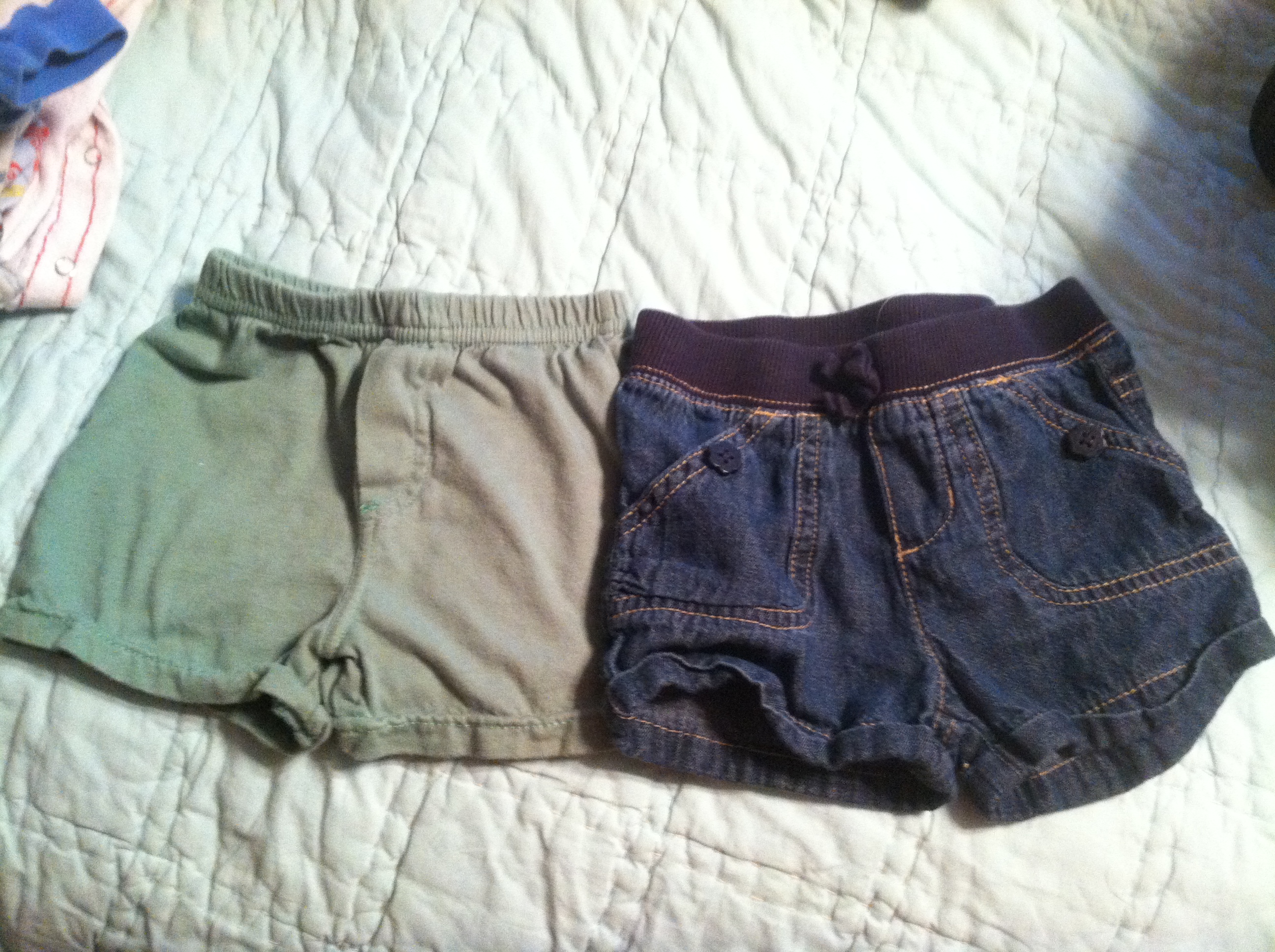
On the right: Girls size 3t. On the left: Boys size 6-9 months.

I’ve realized that these shorts were, well, short. Most of them are. Frustratingly so. Both of my girls have more than a pair of shorts that don’t pass the fingertip rule.

My problem is a little bit the lack of modest options for my 3 – THREE – year old. But the other problem is the double standard. The clothes makers are cutting the same pattern for my 3-year-old girl as my 6-9 month old son. (In actuality, he’s a year old, but apparently quite the scrawny guy.)

The shorts I folded for my oldest boy when he was 3 were distinctly bigger than his infant sister’s. Why is this not the case for the girls in comparison to the infant brother?

Part of the solution is me – and you – the consumer. We buy it and therefore it continues. It’s a known economic fact that companies rarely continue product lines that sit on the shelf year after year. So solution #1 is to stop buying short shorts.

This incident is the tip of the iceberg when it comes to my internal struggle to talk about bodies and sexuality and standards, especially with my girls. (Note: I’m quite careful that the boys hear the same message, but they generally have to think very little about what they wear.) How do we explain differences, some that are anatomical and some that are socially-driven? Why do we expect certain things from boys and girls? Quite clearly, we’re different, only one of the genders can carry a baby on the inside. But how does that translate into how we look at our bodies and then dress them?

This morning H Boy asked if he could go to swimming lessons in just his trunks, without his sun shirt, and I agreed. So, of course, Miss M asked if she could go bottoms-only. I told her no and, as expected, she wanted to know why. It didn’t make sense in her head: boys boobies and girls boobies at this point look pretty much the same. Why is one person’s expected to be covered? (My response was that I wasn’t sure, but I thought it was related to girls being able to feed babies with their boobies. Which is not helpful because I think it’s completely appropriate to feed babies in plain view. I’m discrete when I nurse, but your discomfort with my breast is not a reflection of me or my hungry child, it’s an indication of your view of breasts.)

Teaching modesty is a struggle for me right now. I don’t believe short shorts are advantageous to anyone in our society and while I want my girls (and boys) to be free to express themselves through their fashion, I’m not sure short shorts express anything noble except to say “ASS”. Honestly. What else do short shorts say? Am I missing something? I don’t believe the girls choose the short shorts because they advertise their sexuality, but I do believe they wear them because they’re available. It’s what they know.

Oh, dear reader, we’re in for a journey on this one. Stay tuned.

« Older posts Newer posts »

© 2026 Michele Minehart

Theme by Anders NorenUp ↑