Page 68 of 312

The Play Behind Closed Doors

A frustrating morning this week rendered my children to a “different room, anywhere other than right beside Mr. M,” who was being suffocated by sibling presence. Soon I heard them skitter upstairs. Then silence. A worrisome silence.

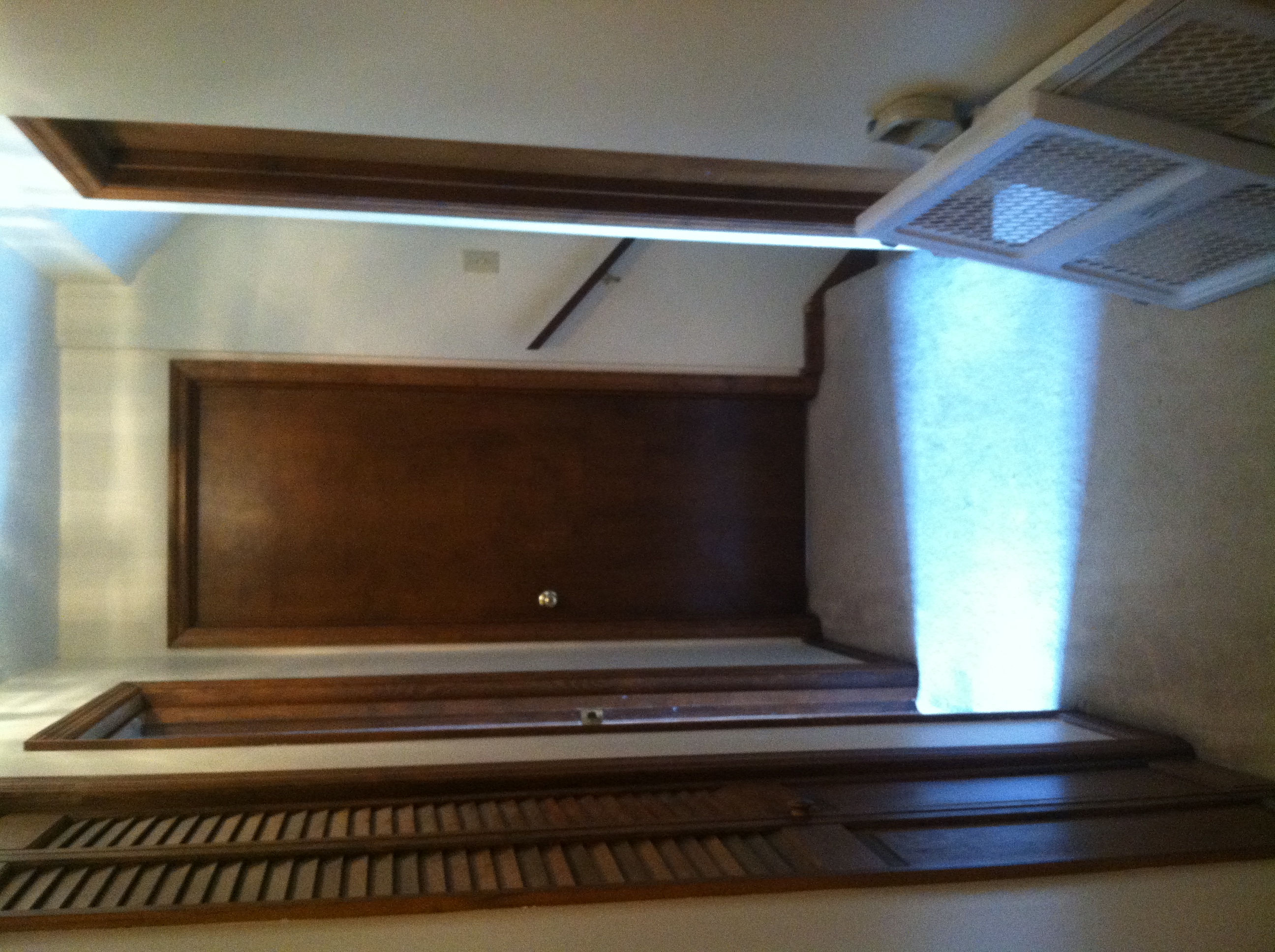
I finished my task and opted to sort laundry on my bed so I could spy prevent disaster. What I found changed the pace of the morning from monstrous to magical. They had shut the bedroom door. They shut me out. closed door
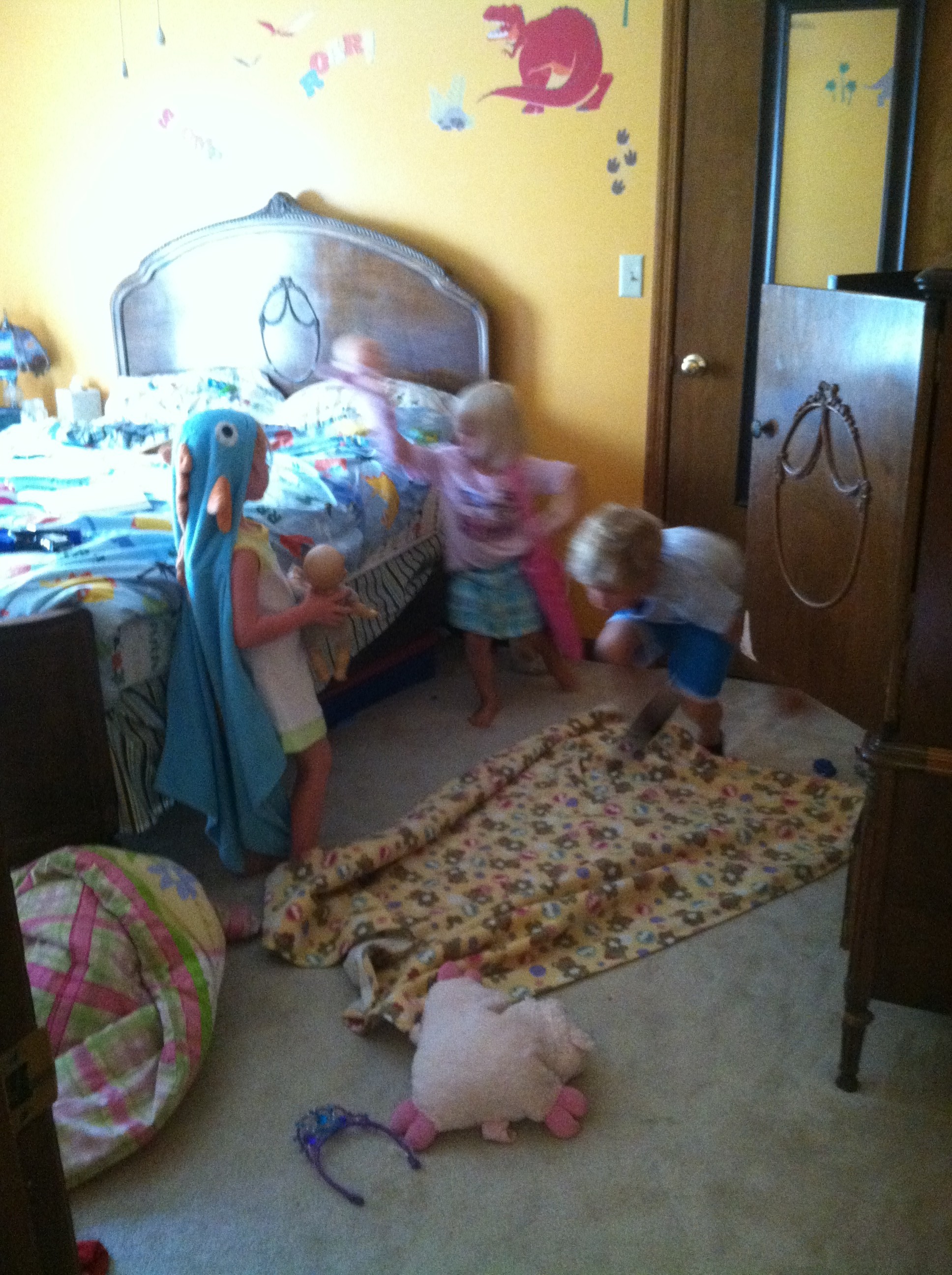
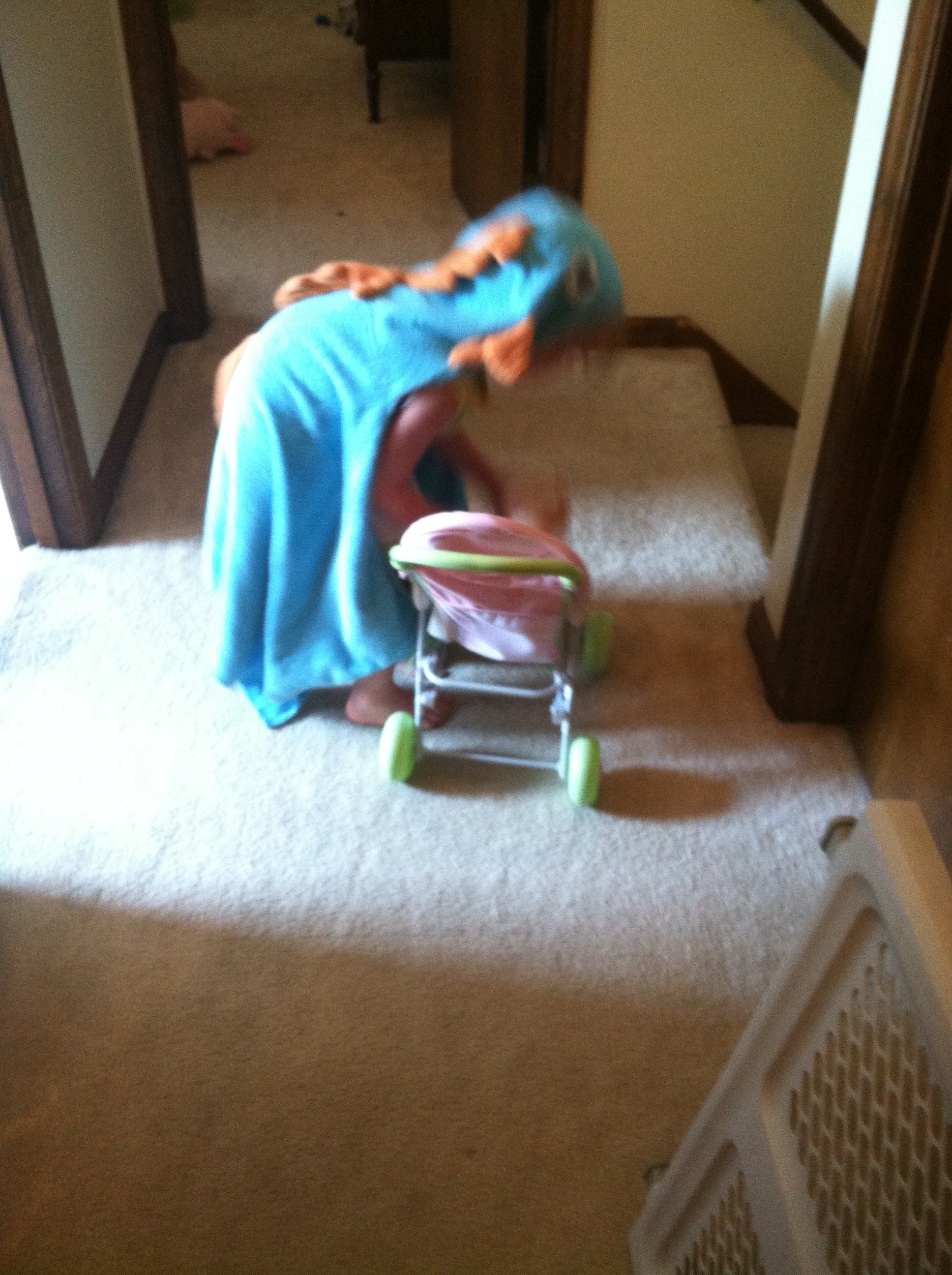
When they came out, unknowing of my presence, they donned bath towels as raincoats, pushing a stroller to take Lady C “to a friend’s house.” Then they dropped Miss M off at “school.” When I peeked into H Boy’s room, they had made a bed on the floor with the girls’ blankets and he had been “reading” to them before bed.

Soon they returned “home.” The next time they emerged, Miss M had a baby stuffed under her dress. “Bye grandma and papa, we’re going to the hospital!” I hear them say. Apparently Lady C was stuck at home with the grandparents because I heard H & M go into another room and then an uproar of laughter: “I pooped it out!” I hear. And then there was a baby. (So. That’s how it happens.)

I kept folding, trying to remain invisible because the truth of the situation rose to the top: while I should be intentional about playing and interacting with my kids at home (and I’m trying to do a better job of this), in their time without me my kids become more imaginative and cooperative. They stick with their play for much longer spans of time when I’m not involved. They try new things, find creative props and tell their stories of life using lenses I simply don’t know how to operate.
PlaytimePlaying House

This is such a good thing.

I half-jokingly say that the best thing I could offer my kids in life is siblings. On this morning, it was simply a true statement.  At one point I told myself, “this is the childhood I dreamed for my children. Right here.” Because it is. When I look back at my early years, I see my sister and I lining the staircase with stuffed animals to play school and getting out our Barbies to live in their piano home with my dad’s basketball trophies serving as doors, beds and furniture. We ventured outside on rusty grain augers and “shredded” snow in the winter. We climbed a dirt hill where one of our cats hid her kittens and affectionately and appropriately called it Kitty Peak. Our industrial-sized gas tanks became horses named Silver and Goldie (which, ironically, were both silver).

Play, play, play, my children. Go. Create. Do. Find the ordinary and discover it with new ideas, see it with imagination goggles.

They rarely do this in my presence, just as my parents were mostly absent from my own adventurous memories (though I can look back to plenty of examples of quality time filled with love and play). I’m not sure why, but I think it has something to do with the responsibilities we carry as adults and our inability to set that down at the door. We’re always thinking of the pick up involved after or the unlikelihood that this could actually work. We feel the need to correct and make everything into a teachable moment. I wonder if sometimes our teaching results in less learning than these episodes of creativity the kids embark upon by themselves.

I just read a fascinating article on children’s learning styles around the world and literacy, but what jumped out at me was the author mentioning how often kids want to learn in private: “When I entered the room they looked up like kids who were caught doing something illicit. This is another thing you learn about kids when they don’t go to school. They don’t want to be watched all the time. They don’t want to be scrutinized and measured. They often don’t even want to be praised or encouraged. They have a remarkable sense of dignity and autonomy, and they defend it fiercely. They want their learning to be their own.” 

So while JJ and I converse about my participation and engagement with our kids (as opposed to work, which I am prone), I agree. Treasure these days with them, sit at the table and make a mess.

And yet.

Send them to the basement. Direct them upstairs. Shut the door. See what magic they come up with on their own.
Dead Leaves & Hidden Fruit

JJ has been less than impressed with my contribution to the family garden this summer. I blame it on our constant comings and goings, but the fact remains I nary picked up a hose this summer nor reached into the dirt to pull a weed or 5. Now, as the tomato harvest overwhelms us, I’m left to pay up.

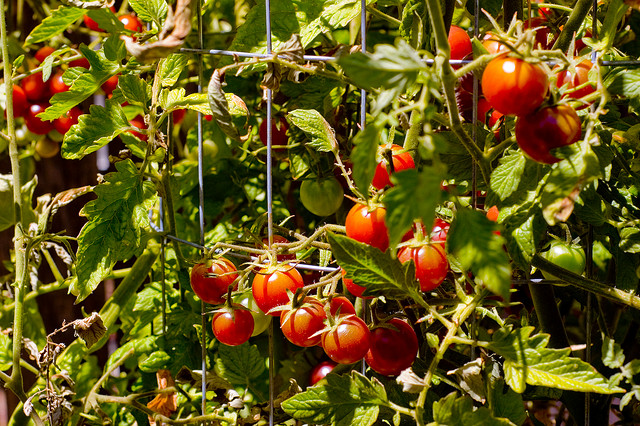
tomato plant

Image credit: CC Benjamin Chun

The first time I went into our patch of plants, I realized part of the problem lied in our poor spacial skills. Our plants live very close to one another and, because of it, the leaves on the bottom part of the plant die quickly. I remembered my friend Dan Who Knows Everything had said that those leaves actually inhibit growth – if they’re not taking in sun to nourish the plant, then they’re taking nutrients away from budding fruit. If memory serves me correctly, he used to trim the bottom leaves from his plants as they were growing to increase productivity.

Last week I made an appointment with a pair of scissors and that garden. I hacked away at all the deadness beneath the surface. And lo! What did I behold? More fruit. There were tomatoes in there I couldn’t see through the brush. And now with the plants a little lighter on the bottom, our harvest is multiplying. I’m actually not sure what we’ll do with all the tomatoes other than offer them as a parting gift to anyone within a 50 foot radius of our front door. Perhaps I’ll take them out to the bus stop and give them to small children on their way to school. They enjoy that, don’t they? Fresh, raw vegetables as a treat?

Gardening is my spiritual metaphor so often – I know, it’s largely overdone. I reflected as I snipped and snapped through the tomato forest, I wonder where I need to trim things up in my life. What is taking all that sunlight and energy my body and life is making and rerouting it away from nourishing good fruit? What dead leaves remain that hide the good things already growing so that no eye can behold them, let alone enjoy them?

[box] But what happens when you live God’s way? He brings gifts into our lives, much the same way that fruit appears in an orchard – things like affection for others, exuberance about life, serenity. We develop a willingness to stick with things, a sense of compassion in the heart and a conviction that a basic holiness permeates things and people. We find ourselves involved in loyal commitments, not needing to force our way in life, able to marshal and direct our energies wisely. (Galatians 5:22-23)[/box]

Am I not showing the fruit of affection for my kids? Serenity with my work? Compassion for those not like me? Perhaps it’s not because I’m not growing fruit. Perhaps it’s because the dead weight in my life keeps them from my line of vision. I often hear people say, “I need to grow more patience.” I’m not convinced you do. I think it’s probably growing – at least budding – in there. Ask, instead, what might be getting in the way? Are we too stressed by a busy schedule to enjoy moments of joy? Are we overwhelmed with financial worries that we cannot slumber in peace?

Don’t be as concerned with the fruit: spend some time pruning the plant.

Bottomless Pit

I love to eat. I enjoy healthy food and junk food, salads and McNuggets (though I certainly have tried to curb the latter). I even accepted Indian food into my life again earlier this summer after avoiding it for 8 years following my trip there. (Turns out it I didn’t dislike the food – it was the aroma of dog and feces which invaded my experience that turned me off.) I snack frequently and look forward to social interactions because they likely include food.

Should I be so surprised that my kids also enjoy it? I’m thrilled about this. So far, they eat with a broad palate. We make lunches of sliced bell peppers, cucumbers and hummus or soups. A bean and rice bowl is met by willing mouths. And, like their parents, my kids enjoy dessert. I try very hard to approach all food – even those made of dairy or including gluten, which we avoid – as gifts so we don’t have “bad food” and “good food”. It’s all good. Some of it makes us feel crummy later – specifically H boy and mama.

This evening Lady C tried to convince me that we didn’t eat lunch. Which is completely false because today was McCommunion. Then we went to a picnic with church family for dinner. I reviewed with her our gluttonous menu plan, reiterating we ate 3 full meals plus snacks and daddy generously gave her one of Grandma’s Monster Cookies before bed. Yet the girl insisted that we missed a meal. (Come on. As if her Mama could ever do that.)

As I repeated our 3-meal-2-snack life, I couldn’t help but remember the many kids (and adults!) in places near and far who ate a quarter of such food. I’m guessing that research could provide evidence that we ate more today than most people in the rest of the world. (I tried a basic google search to find a statistic which would catch the eye of you numbers-driven people. However, I got dizzy and a little depressed after my first search result from the World Hunger Education Service).

We walk a fine line with our kids when it comes to waste and abundance. We want them to know they will never be in need – their family will take care of them. That’s not a worry for them to take on themselves. However, we also want to instill in them a sense of responsibility that comes with our privileged place in society.

“Starving kids in China” didn’t really work much for our generation – I wanted to send my mom’s roast over as an offering of my concern – but I don’t want my kids to leave the house thinking that food is a limitless supply. In our circumstance, yes, we can always buy more. But not everyone can. And when we do that – when we toss it in our garbage instead of our mouths, we are removing it from the shelves and changing the economics involved to get needed resources to the people who need them most.

In general, if a full meal is presented yet not consumed by one of our children, it waits on the table for snack time as a second chance and no snack will be served until most (a word defined only by mom and dad) is eaten. I simply can’t bear to throw away one bowl of food only to refill it immediately with another.  Is it so bad to allow my children to feel hunger once in a while? They’re much easier to deal with when well fed, and I’m not advocating a 40-day fast in any sense, but is our easy access to nutritious food standing in the way of naturally learning the virtue of self-control and perhaps even generosity? Just feed one

The Report said that nearly a third of the world population is living on a diet equivalent to $1.25 each day. Now that Wendy’s jacked up their Value Menu, you can’t even get a single sandwich for that, let alone 3 squares and 2 snacks. And we’re not talking about produce. That budget will get you a bag of organic apples for the entire week and nothing else. Can you imagine your week’s groceries consisting of a bag of apples for each person?

A friend of mine pastors a church that spends the end of the Lenten season in a Week of Solidarity to gain an understanding of life for the poor around the world. They use the season of fasting to eat only what $1.25 will purchase and spend time praying for those in need and giving their remaining grocery and food budget to organizations devoted to feeding the hungry. After this evening’s brief discussion, I’m wondering how I might differentiate that for the children so they can begin to understand that the joy of food doesn’t come just in cookie form.

How do we begin to make a lifestyle of acknowledging that our satiation isn’t a reality for all people without heaping guilt upon them every time we sit at the table? I feel a healthy tension is required, one that doesn’t result in worried souls but rather compassionate and aware little humans. I want them to keep their healthy appreciation of food and eat so their little bodies grow strong. It’s not the food that is the enemy: it’s our casual indifference to the waste of it.

« Older posts Newer posts »

© 2026 Michele Minehart

Theme by Anders NorenUp ↑