
Page 5 of 312

Why Browns fans are my favorite people

Growing up, my family was NFL-unitarian. We had strong beliefs as it pertained to college football, but on Sunday afternoons, we were pretty welcoming of all traditions. My dad would watch whatever was on without deciding that one team was better than another. Because it’s human nature, the teams with proximity to us took precedent, so we would elevate those, and when we were forced to choose each December, we qualified as a Bengal household. (It is my belief that we defaulted to Cincinnati allegiance because my grandfather was an avid fan of the Reds).

As an adult, I married into a similar football religiosity in that my husband cared deeply for the non-professional football games, but enjoyment of the NFL came through participation in a fantasy league. My kids ask when games are on, “who do we want to win?” and it changes from week to week. Because nothing unites like a common enemy, we sometimes say, “not the Patriots.”

But I have friends who love the pro football. They have jerseys and belief systems and they schedule their Sundays around such things. I like all my friends, but I have to tell you that I have a secret favorite: the Browns fans.

The Browns don’t win. Because afternoon football needs more than the game to make it interesting, one broadcast ran the stats on the loosingest team on the road. The Browns were second, behind the Lions. “Good heavens,” I thought. “The Browns can’t even win at loosing.”

The other pro teams in the CLE have redeemed their loosing years either through breeding talent like LeBron or by a major motion picture with Charlie Sheen that can be quoted ad nauseum. But the Browns have none of that, and they have to wear orange.

Yet the fans show up. They complain, they declare they should have found a new team decades ago, but they cannot let go. Why?

I call it hope.

Rob Bell defines hope as the belief that tomorrow will be different than today. (Despair, it’s contrasting belief, is the belief that the future will be the same as the past.) So those Browns fans tune in, not with optimism blinding them to the lack of particular talent; they’re depressingly aware of their deficits. But somehow, they believe that the deficits don’t define the team.

If I need someone to put me right again, I turn to my Browns fan friends because if they can believe that about a bunch of 300 pound strangers, they can believe it about me.

I don’t need more people who can be faithful when all is right; I need people who are comfortable and familiar when things don’t pan out the way we dreamed. I don’t need more friends who can win, and gloat, and make insta-perfect lives with the impeccable taste in draft choices; I need people in my life who live honestly in the everyday realities but with a sense of hope that can drown out the negativity. I need people who make the active effort to believe that the next day, the next game, the next season, will be different from today.

I cannot name who is first in the AFC or any of the other facts and letters that float about on a Sunday. I don’t have flags to wave or even a fantasy running back in which I can rest my hope. Instead, I’ll take the fans that defy the popular claim that if you’re not winning, you might as well quit. Nope, I’ll find a seat by those who keep showing up.

Against the grain

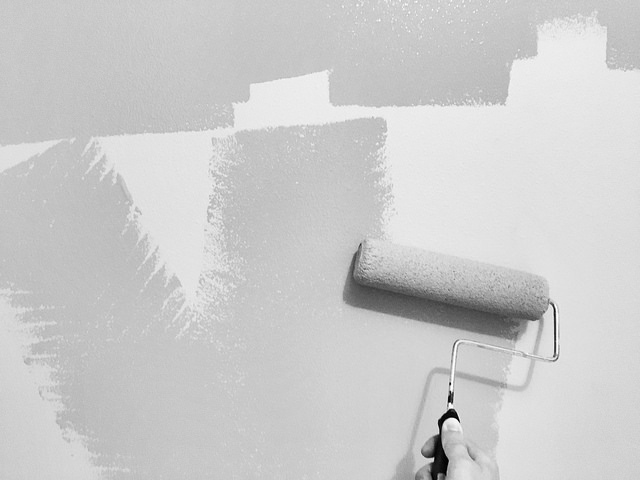
To say I’ve been buried in home renovations for the summer is a slight understatement. We took on what is not a little weekend DIY – it involved contractors, HVAC, plumbing. It will someday be beautiful. At the moment, however, it is a blend between drywall-gray and primer-white, accented with the earthy tones of plywood and subflooring. (Please, don’t be so jealous of my glamorous life.)

I simultaneously refinished our dining room table so that it will be ready when we have a dining room again. Originally I had simply spray painted the 70’s table and 8 chairs, but time and children had its way, and now I have to do a real version of painting it. Sanding, primer, primer, paint, paint, touchup, and then a good lacquer to prevent the process from needing a repeat.

Day after day as I dipped my brush in yet another can of pigment, I noticed patterns and, of course, noted the lessons. Namely, if you want the paint to cover the surface well, you need to take it across all angles. I noticed this especially in working with wood, but my ceilings and walls were no different. If you worked in only one direction, yet didn’t get good coverage, you essentially just kept adding paint and then watched it leave drip marks on your hard work. But if you applied horizontally, vertically and with a few angled strokes, the paint would blend into the entire area.

When painting my furniture and walls, my goal is not to get as much paint on the surface as possible. The goal is transformation. I want to change the space I’m living in. 

It made me think of how, on the yoga mat and in life, we so often attempt things from only one angle. We try and we try, thinking if we just do more of that thing (eat better, go more often, push harder) that we’ll reach the goal. Often, we end up with just more of the same. But the goal is never more yoga, less carbs, more learning, less toxins (or to make this more spiritual: more books, more prayer, less sin). The goal is transformation. 

If adding more of the same isn’t changing your work, perhaps take it from a different angle. Come at it sideways. Ask a question, look at it from the other side. Walk around the thing, change the lighting, maybe even ask a friend to lovingly put their fresh eyes on it to see where you might have missed.

And for heavens sake, wash the brushes thoroughly when you’re finished. The paint is harder to remove with age. (That idea begets its own separate writing. But I have to go paint another room.)

Under the Surface

This past weekend we were reunited to beloved neighbors and spent the evening dancing and deciding which flavor of cupcake was indeed the best. As far as weddings go, the kids mumbled sleepily on the way home, “this was the best, ever.”

With things like fresh, youthful love, supported by loving and close-knit families, it was easy to feel a sense of joy growing throughout the day. Supplement that with tasty drinks and a good Cha-Cha Slide, and you have the makings for 8 hours of non-stop smiling.

Partway through the dance party, the DJ asked the family to the dance floor and dedicated a song to the bride’s grandfather. Someone brought a chair for him to support himself, but he put his hands-up-and-shout’ed his way through the whole song with a smile as wide as the expensive tent. All of a sudden I became a blubbering mess over this man whom I’d met about twice, prior to the wedding. It made me so happy to see him surrounded by family, celebrating.

There was no survival story, that I’m aware of; no overcoming of a deadly disease, no fears of not making it to the wedding. He’s simply older, needs a cane, and wanted to dance. So he did. This wasn’t an episode that would become viral on Facebook.

How is it that a near-stranger dancing to a song played at every wedding could evoke such a sense of profound joy?

We often think of joy as a feeling we encounter when things happen to us or around us. We feel joy watching our kids play baseball, or when we enjoy an evening with friends. Those moments “bring us joy” we say.

I’ve been pondering joy, along with other virtues like faith, hope, and love. How and where do they exist? How do I experience more of them?

In the past, I treated these ideas as more of a topical solution; that when I’m feeling down, I simply apply a patch of joy to my arm and instantaneously feel better. People without joy just hadn’t filled their prescription. In a similar way, I’ve believed that I would need to “have more faith.” As if I could go out and get some faith cereal and eat it for breakfast so that it would strengthen me for the day. When I felt faithless, it was because I didn’t have enough. If I felt loveless or unloved, it was because love wasn’t given to me.

Krista Tippett writes in Becoming Wise about the sister virtue, hope:

“Hope, like every virtue, is a choice that becomes a habit that becomes spiritual muscle memory. It’s a renewable resource for moving through life…”

According to St. Krista, these virtues aren’t applied topically but grow from within. And it seems that the more you tap into it, the easier it gets to access.

I imagine joy to be less like a lake that you go to visit on a sad day, and more like the body of water that resides just below the surface of the earth. The moments of our life where you know you can feel joy – the baseball watching, the evenings of book club or girls night – those are like wells. They’re easy access points to drink the joy. But that doesn’t mean joy is only at the well. Joy is everywhere, under the surface.

The feeling of joy doesn’t happen to us, it overflows from within. Watching Pa dance wasn’t a reflection only of him, or the night. I was walking on shallow earth all evening, feeling close to the joy running under me, and at that moment I was able to poke a straw into the damp grass and drink the joy.

How much more joy – and love, and hope, and faith – would I experience if I stopped looking around for where it might land on top of me, and instead work those interior muscles of sensing that which already exists? How much more contentment would people of our culture encounter when we began to live knowing that what we’re looking for cannot be given to us, only discovered?

It’s safe – and even beneficial – to live expecting joy to squirt like geysers into your life. Maybe there will be moments when you’re walking through a desert, where it seems to be less prevalent, and that’s a time to ask the locals how to find what you need. But I’m confident the world – and humanity – was created with an endless stream of good things within it, just under the surface.

« Older posts Newer posts »

© 2026 Michele Minehart

Theme by Anders NorenUp ↑