Category: beautiful life (Page 7 of 35)

The cockroach in the pasta

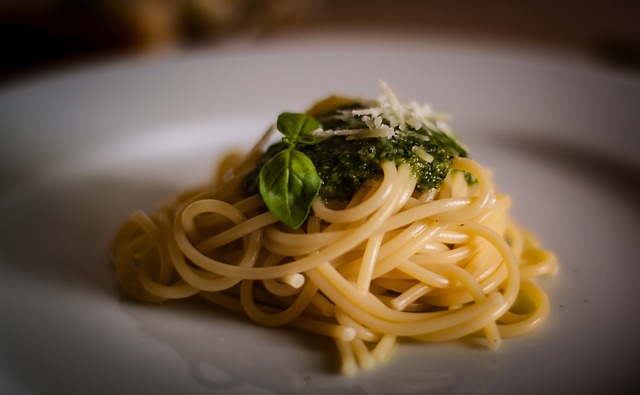
Imagine you’re eating a bowl of freshly made  pasta in the countryside of Italy at a cozy restaurant where grandma handed down the recipe from her own grandmother to the chef. The local wine complements the meal and the sun begins to set while dinner is prepared. The food arrives to your table, beautifully plated with basil, and you sort of want to immerse your entire face into the deliciousness of the meal.

And then a cockroach drops down from the rafters and into your personal paradise. Right onto the pesto-laden fork.

By all logical standards, your meal is ruined. If the maitre’d were to suggest you simply pluck the cockroach from the plate and continue on, I’m guessing you would demand a refund and head down the street for gelato.

As I heard on a podcast recently, this is negativity dominance. The bad of the cockroach overpowers the good of the pasta, and perhaps even the good of the wine, the sunset, and the entire evening. But why?

Well, cockroaches are gross and humans shouldn’t ingest them. Nor should we ingest anything that a cockroach has put its grubby little feet upon, because they may have walked in poo. These rules about food keep us healthy, and, for our ancestors, alive. “Don’t eat pasta that cockroaches walk in” is solid advice.

But what if that advice has a limited context? What if the badness doesn’t always ruin everything?

Often we approach life as if we have a bowl of pasta and our trials and challenges are cockroaches. We render the entire meal worthy only of the trash if a trace of badness gets into our good.

We have a home, but it gets a leaky roof or the garage door stops working? Total loss. We married a perfectly delightful human, but she refuses to scour the bathtub? Misery.  Of course, we don’t regularly give up on big things like houses and marriages because of minor inconveniences, but we do often notice only these things. The goodness in front of us has been tainted with badness and, much like our bowls of pasta, we want to render the whole thing un-stomachable.

In Jesus’ parables, he teaches about things like farming and food. One time he told people that a guy he knew planted a field full of good wheat, but in the middle of the night, the guy he beat in the 100m dash in high school thought he’d take revenge and planted a bunch of weeds in the field. It all started growing at the same time and the farmhands thought maybe they should go out and weed the whole acre. The farmer said, “Nah. We’ll sort that in the barn, after the harvest.”

Jesus said the farmer’s fear was overzealous weeding. “In pulling up the weeds, you might take out some of the wheat.” The bad grows with the good. It doesn’t have to ruin it. We have to let the good continue  to grow.

In our efforts at health and generally staying alive, a negativity dominance has been helpful. Yet as it pertains to humanity, I think less dualism – either/or, only/but thinking – might render a more meaningful and satisfying life. Things can be both terrible and wonderful. Normal and holy. A field can have weeds and wheat.

Humans are not static, cooked pasta. We’re dynamic, living beings. Pasta is what it is, changed only by outside forces. Humans grow, often bearing only a faint resemblance to how we began.  What might become bad or good is often yet to be determined, so unlike the pasta, we don’t need to throw out what is in front of us – be it that which greets you in the mirror or that which sits across the table – because of blemish or impurity.

Our lives have enough space for the good and the bad: our challenges, struggles and griefs don’t have to render the whole thing to the trash.
Moms of Little League, Huddle Up

Ladies, come in close and chat. I’d like to toss this out there before the first at bat, so everyone knows I’m not reacting (or over-reacting, depending on the critic). If I mention this now, I’m not pointing a finger at anyone, I’m only tossing it out the wider public. (Also, this is not just for the ladies. I simply know that in 2/3 of American households, the women do the grocery shopping. Gents, you’re welcome to the conversation.)

Now, can we talk about the event showcase of the post-game snack?

First, the drinks. I just have to get this off my chest. We do not need to balance the electrolytes of an 8-year-old who spent 2 hours standing in right field on a chilly May evening. Can we please stop believing the marketing that Gatorade has ingeniously embedded in our psyche? These are not high performance athletes, they’re children. Water! Water is the choice of athletes, even the top tier ones. Water stations are by far more popular among the race routes I’ve encountered.  If you really feel the need to go crazy, maybe a juice box could suffice because at least it came from an actual fruit.

Please, my friends. Don’t be fooled by the commercials. Drinking the fake-sugar, fake-colored glorified kool-aid does not make a kid a better athlete, any more than dressing him in Under Armor amplifies his performance. If we’re going to drink the stuff or wear the stuff, let’s do so in the name of enjoyment and not be driven by this idea that we can buy stuff that makes us into who we want to be.

And also. (Yes, there’s more.) I’m all for a good celebration. Life is precious, so please commemorate the occasions. I don’t think we celebrate (truly celebrate) enough in our culture, mostly because we’re too busy to slow down and savor life’s beauty. So do things to remember significant events – please. This may mean cupcakes or champagne or slightly more expensive attire. Do it.

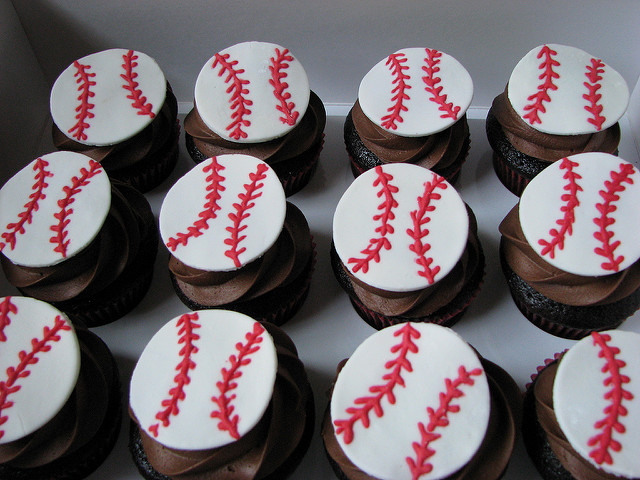
AND. When something happens twice a week, this is not a “special occasion.” This is a schedule. Your turn to supply the post-game snack is not a celebratory event. It’s a treat the little guys can enjoy, but doesn’t require confectionary genius. Personally, I think a Hostess cupcake goes overboard. Can we try a few orange slices? For those to crunched for time to do any slicing, a whole cutie works just fine. For those Pinterest moms who just need to make it their own, make some sort of edible joy out of peanut butter, celery, carrots, raisins, bananas or apples. Get as cutsie as you wish. But can we all aim for food that is grown, not made in a factory? You’ll spend the same $7 on fruit as you will on a package of snack-sized Doritos.

Ok, team. Here we go: another season. If we work together we can give our kids a delightful experience of chasing catching fly balls, hitting home runs, and celebrating hard work. But it doesn’t have to be a freaking birthday party after every single game, twice a week, for a month and a half. Let’s actually encourage their physical health by filling them with the nutrients they need to grow  instead of the sugar treats disguised as something more.

I feel better now. Love to all. See you at the ball field.


Imperfect Parenting and the River of Goodness

One of my greatest parenting successes has been convincing my children that a trip to IKEA’s “Smaland” is barely a step down from COSI. We treat it like a museum or McDonald’s PlayPlace – an event designed around their fun. (Little do they know, mama is accumulating a cart full of garlic presses and organizational bins.)

So on the Random Friday With No School, I decided a trip would be the best use of our time. JJ was off to other productive work, so all 4 kiddos and I headed to Canton. The lady working Smaland was less than excited to see me (she tried to exclude both my youngest and my oldest, but we easily fell within the height requirements on all fronts), probably because we take up 2/3 of the available kid allotment. They had fun not jumping in the balls, and I found the necessary non-brass light fixture. The kids opted for lunch in the Ikea cafe, so we headed upstairs.

Prior to walking through the line, we had a team meeting to clarify expectations: once food was ordered and on a plate, there was no changing of the minds. Everyone executed.  The line was a tad tricky, and we made it through without tears until we sat down and the youngest discovered that french fries had not come with the meatballs he requested. Mama was going to share, but there was no convincing him of anything. Trading plates of meatballs didn’t work. I couldn’t just take the other kids’ food – I’ve learned this the hard way. You just end up with more tears. The other kids were looking at me, waiting as patiently as possible for ketchup while the baby of the family melted into a puddle on the chair. And in my arms.

It was clear there was nothing I could do to save the day. I was powerless until he actually put some food in his belly and overcame the Hangry. I couldn’t leave him to get the ketchup. I couldn’t get him to settle down.

And then, the oldest took a handful of his fries and laid them on his brother’s plate. The other two kids followed suit. They dished off food until the tears stopped. We were finally able to fetch the condiments without nasty looks.

While I had maintained most of my composure during The Episode, I know my Bigs felt the energy of my defeat and frustration. For the rest of the meal, my oldest was beyond helpful, refilling water and ketchup without being asked. He hugged me no less than 4 times.

In the midst of their mama’s powerlessness, my kids stepped up. They realized that to make the best of the situation, they would all have to come together and help one another. This is a lesson they could never learn if I were to continually make the problems go away.

I can preach to them that we belong to one another or tell them to serve and love using more than their words. These will be quotes on a printable until I give them opportunity to put on shoes and take the ideas for a run. Without the chance to do it, they may never know what it feels like to live their values, which we all know is a whole lot different than simply believing something.

I’ve never felt like a perfect parent, and I’m confident my kids are aware of my flaws, so “imperfect parenting” isn’t just about me and my shortcomings. I’ve heard other parents talk about how in our mistakes we can show our kids grace and the need for forgiveness. But I think accepting our imperfections has wider implications.

To parent imperfectly means to stop filling 100% of the holes for my kids and let them learn how to clean up a leak. I think we should give them a chance to let their heart whisper “hey, go get a towel!” and then allow them to feel the sense of goodness that comes from doing a good thing that has grown from their own place in the world.

What if kids learned to trust their ability to do what is right and good?  What if they learned they actually have the capacity to change a situation, even if it’s only in the enjoyment of a meal as a family? Isn’t that still something worth doing?

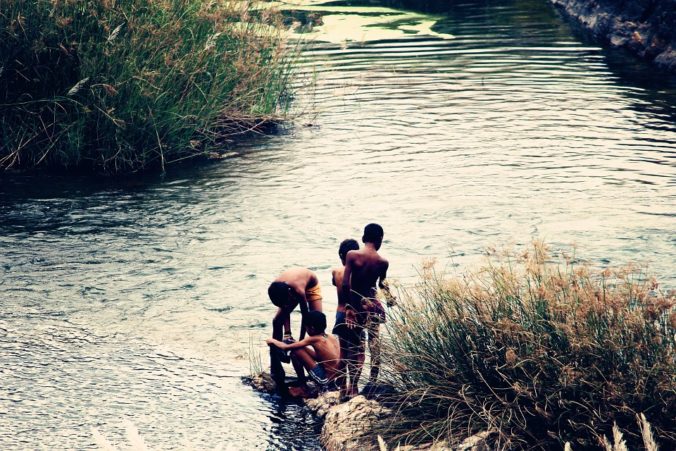
Goodness is like a stream running throughout the universe. Sometimes we’re swimming in it, and sometimes we’re not. But I’m not sure the Goodness River is something that you can toss your kids into; they have to learn to jump. As a parent, the best thing I can do is to dive in as often as I can, and assure them that they’ll float when I see them standing on the banks, contemplating a swim. And, as they come up from under the waters, greet them with a smile that shows them how proud you are that they’ve decided to take the plunge.

« Older posts Newer posts »

© 2026 Michele Minehart

Theme by Anders NorenUp ↑