Category: beautiful life (Page 17 of 35)

Thankful for Enough

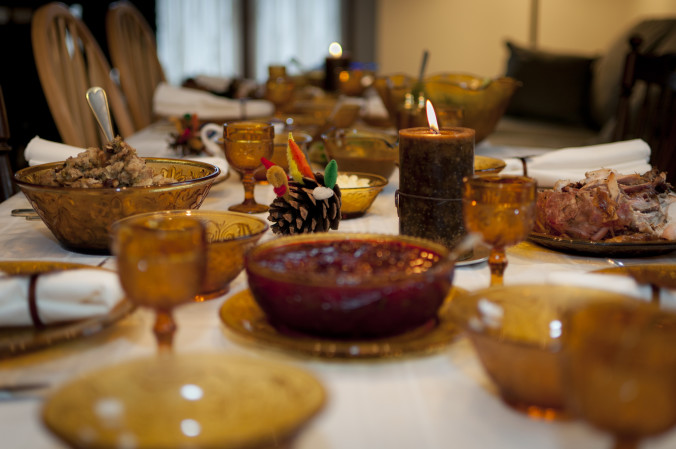
This time of year we usually sit down to a table abundantly filled with all the trimmings and gorge, a way of celebrating the many things for which we are thankful. So not to be too materialistic, “family and friends” usually tops the list of our thankful list, followed by the many things we have that keep us safe and warm and protected. Good stuff – nothing wrong with that.

This November, after having spent nearly an entire year with my view flipped upside down by Brene Brown exposing me to the way we live in a culture dominated by theoretical scarcity, it changes Thanksgiving. Scarcity tells us that we have what others do not, so we ought to be thankful. That line of reasoning ignites a fear in us that, perhaps, the tables could be turned. We could be the ones living without these things. So we should be thankful for what we have.

That’s not gratitude. That’s fear.

“Show an appreciation or risk loosing it.” That’s the dominant mindset of our typical American Thanksgiving. (And, oh, how often have I used that mentality in dealing with my children?! I hate when my writing means I have to start living my values.)

We sit at our tables on Thanksgiving day, often holding with tight fists the things we love most, declaring our thanks to them and holding them up for display. We have this. And we may not have that, but we do have this. And this.

Take out scarcity, and what do we have? If we believed in the concept of Enough – that the world is big enough to hold us all, that God and the universe can supply all our needs, that life is not a Zero Sum game – how would our posture change?

I think we would begin to realize we don’t have a corner of the market and we don’t have to mark of our territory. We don’t even have to fear loosing our blessings, that if we’re not thankful enough God will pry them from our fingers and hand them off to the next guy.

I think we would share more. I think we would open our tables and our hearts. I think we would live with a sense of humility, that what we have isn’t always a direct result from our hard work. I think we would celebrate a shared victory and even root on those around us – perhaps even those different from us.

Isn’t that what the Pilgrims and the Indians thing is all about? Two groups of people who lived as if the land could support both of them? These folks decided, instead of killing off another group to have what they have, to believe there was enough for everyone at the table. The original Thanksgiving was a day when Scarcity Theory didn’t win. They sat down to their turkey and stuffing (not completely true) and saw they had enough. They didn’t have to fight. They could choose harmony over hatred, and collaboration over competition.

Perhaps this Thanksgiving we can approach the table with open hands. Not with eyes on what others do or don’t have, but with what lies in front of us. This year I’m thankful for enough. There hasn’t been a day this year that we have run out of what we needed. Money in the checkbook, energy at the end of the day, love in our hearts, even health in our bodies (said the same time that pneumonia is ravaging one of us in this house). We still have enough.

We don’t have it all. But we don’t need it all. We only need enough.
Called to an Apron

Originally published November, 2013

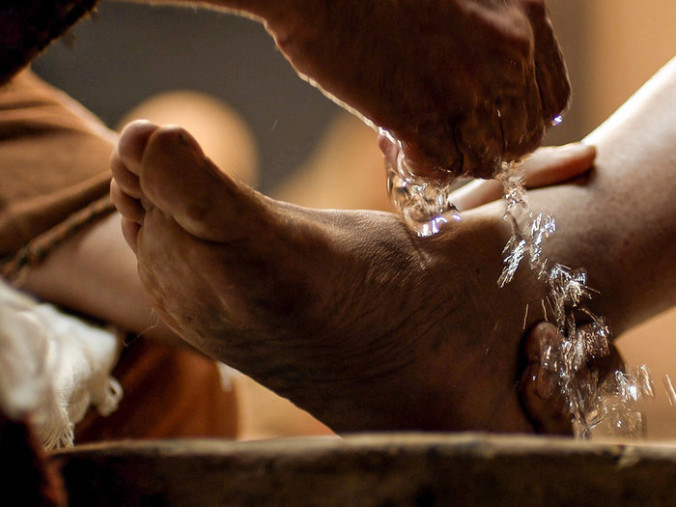
Last night while JJ was bathing the baby, I recalled one of my favorite memories from serving the church. On the last night of our mission trip to Mexico, one of the adults on the trip washed the feet of his high school aged son. I was supposed to be the leader of the trip, and there I was, hiccuping back my tears. (Let’s be fair: everyone was crying. It was the last night of the trip, we were inspired from the work and teaching, and dead tired. They probably had Michael W. Smith playing in the background.)

Why is it when one washes a 4-month-old, it’s called parenting, but when the feet are 16 years old, it becomes servanthood?

Not to take away from the service of rearing small children – I do this daily, and I liken it to service. But I’ve never cried at bath time – at least, not over the power of the moment of washing my children.

Perhaps service becomes more powerful when we do something for those who could do it for themselves.

“Service”generally gets paired with those who need help – we feed the hungry, educate the poor, provide clothes and medicine for the sick. These are good things and we need to continue to do them – out of respect for humanity, following the example of Jesus, under the command of God to live justly and have mercy.

But I might not categorize these as service. These are alms, caring for those who Jesus holds dear, the least of these.

When Jesus talks about becoming a servant, he’s washing the feet of grown, capable men. And not just men who want the best for him – he’s washing the feet of his betrayer.

In our culture, we value the power of the pulled bootstrap. We want self-sufficiency and productivity. One of my goals as a parent is raise contributing members of society – and these are not bad things. But I’m not sure they were the goal or example of Jesus.

The 5-year-old is now in some sort of laziness stage, asking us to do all kinds of tasks that he has been doing for years – getting a glass of water, retrieving his socks from the drawer, putting away toys. My response sometimes is frustration – do it yourself, child! I wonder, though, if the example set before me in John 13 is put on the apron and serve. To live an example that I will serve those who are capable because I love them.

We worry about this kind of service, probably out of fear that we’re being taken advantage of – a power struggle. I heard a message by Jonathan Martin where he said, “We’re all about being a servant until someone starts treating us like one.” That’s our fear: that people use our service as an excuse to lower our status. Our hard-earned climb.

But the entire story of the upper room began with, “Jesus knew that the Father had put him in complete charge of everything, that he came from God and was on his way back to God. So he got up from the supper table, set aside his robe, and put on an apron.”(John 13:3). It ends with the command, “If you understand what I’m telling you, act like it – and live a blessed life.”

Best Friends

I met my first best friend, Diane, on the first day of kindergarten. She rode with me on bus #5, and she sat with her big sister, Amy. In a foreshadowing of my future life, I sat down in the seat across the row and turned to them and asked their names. I promptly forgot the names, but I stuck with them when we got to the school, down the stairs and into the room on the left.

Later, probably not the next day, but in my mind it sticks together with the bus ride introduction, I sat by Diane as Mrs. Mouser reviewed addresses. She asked us each our zip code. We were both 43345 and we thought this was a sure sign we were destined to be BFF forever. (Nevermind you, the class was divided by town – all Ridgeway kids went in the AM, the Mt. Victory kids in the PM. Which means, every single kid in our class was a 43345. But, whatever man. Destiny.)

I managed to keep her around through my elementary years – even when the 80s fashions were at their height and I wore biker shorts under everything. We were equally book nerdish-enough to not apologize for spending the weekend reading The Babysitter’s Club newest release. We would regularly stay the night at one another’s house and staying at her house on a Saturday was a special big deal for me because that meant I went to church with her on Sunday. Though I often went with my mom to our own little country church, her church was something else. Their sanctuary! It was huge! I returned to that church years later, on Diane’s wedding day, to discover the room seemed so large because I was so small. As a 23-year-old, the sanctuary was quite ordinary.

Diane and I played in the band, rode bikes, and explored the outdoors. I helped her with her chores in the dairy barn. Her dad teased me about anything and remains one of the most hilarious people in my memory. I saw my first living being birthed in their barn – a small calf, which the mother had trouble delivering. John had to help pull it out. Diane’s mom asked questions about our days and our friends and when we were disappointed she would sympathize, saying, “aw, bummer!” She would serve us breakfast of fried doughnuts, made from those biscuits in a can, fried in a fry daddy and tossed in a bag of sugar, with a side of whole milk, straight from the cow. Or Tang.

In our teenage years, we parted ways. It was amicable, mostly a result of interests – I took readily to sports and cheerleading and she enjoyed band and music. We ended up in different classes, only seeing one another in Spanish or Advanced Math. She started dating her boyfriend-now-husband and I flitted around social circles as the seasons changed.

In my more typical teenage raucous years, as rumors piled up, Diane never treated me differently. I think it was one of those things where you love a person at a deeper level – not for how they act in a given day or year, but for the true nature of the person you know them to be. Maybe she did roll her eyes or shake her head – but I never knew. She treated me as a good friend would, and that’s what mattered to me.

A friend once told me Diane’s mom had called my mom with concern about my behavior. I have no idea if it was true or if my friend made it up. I didn’t respond with fear – I felt loved. Someone cared enough to ask. Someone cared enough to call. It was a brave thing that her mom did, if the tale is true. I hope I have that kind of bravery in my soul, that kind of love for another person’s child, to call up a fellow mom and say, “hey, is everything okay?”

JJ told me that a boy in H’s class referred to my son as “his best friend.” This is the first time in his nearly seven years of life that the title has been spoken. I’m thankful another person on this planet appreciates him, and even elevates him to a VIP level. The boys trade Lego love and he’s coming over to play this week. It’s a special time, probably more for me than even him. I’m anticipating many years of sleepovers and pizza nights and baseball games and lego-athons.

There are no guarantees that my kids will develop the kind of relationship that Diane and I shared, one that I revere still today. I realize kids tend to have hot-then-cold patterns to friends and things change over time. I feel it would be a tad bold to ask God to give each of my kids a Diane, though I would be thankful if He did. I do hope my kids each find families full of Bettingers. Good people who hold hands as they pray and work hard and ask us to each pitch in as we visit. People who make you feel loved and accepted and welcomed.

But I can’t control their friends, nor even their choice of friendships. I can’t dictate them to my choice of friends or families and it wouldn’t be fair of me to do so. What I can control is what I offer to the future BFF’s of my children. I can fry the (gf) doughnuts and offer to take them to church. I can listen to their stories from school and create space in my household where they feel safe and free and alive and loved. I can care enough to call in those troubling years – not judge or advise, but to listen and to be present.

I want them to have friendships filled with enjoyment and like interests and special secrets. I want to give them a place to keep that friendship safe, alive and even sacred.

« Older posts Newer posts »

© 2026 Michele Minehart

Theme by Anders NorenUp ↑