Category: a hope and a future (Page 10 of 20)

Raising Nerds

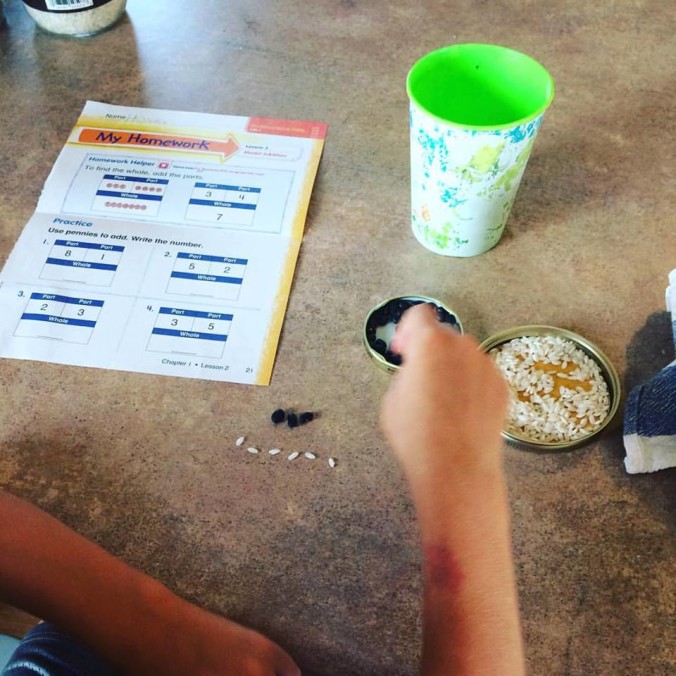
While at the lake, the young boys contemplated fun things to do that didn’t involve screens. Now one to contribute, my eldest offered, “I had math homework. That’s fun!”

Part of me is so very proud. This will put me in a top-notch nursing home someday. Upscale with organic applesauce and fair trade decaf coffee. Only the best and (most expensive) for this genius’ dear mama.

The honest part of me will say it scares me. If you’ve had a child, sibling or even a dog, I think you know the feeling. A sense of wondering, will he be included? As his mother, I love him in a particular and all-encompassing kind of way. I’m aware the rest of the world doesn’t have such thick ties – they’re free to love their favorite parts and tease about the rest, which is terrorizing.

We want our children to be loved and accepted. This is why we buy Under Armor, yes? Those little 10-year-old bodies don’t need power-wicking and compression. We’re buying a Sense of Enough because we desperately want them to be enough. To be included. Whether or not we had a place there, we want our kids to sit at the Cool Kids Table.

Except, I would argue, we actually don’t.  We just think we do.  Most of us don’t want to make cool the ultimate goal – it’s simply the most visible one. If other kids are flocking to your kid, then your kid must be someone good, right?

We mistake popularity for connection. I think perhaps  when we say we hope for our children to be “included” what we really wish is for them to be known and loved for themselves. We want them to have friends who appreciate and honor them. We want them to feel the connection we have with our closest friends, families and partners. (Or that which we wish we had.)

The easiest and most readily-available solution is to help them become what is likable. There’s a profile out there (one, I would say, that is much more rigorous for young girls, but that is another post). Depending on your context you have to put in the ingredients for the right amount of brains (but not too nerdy), athleticism (in our parts, there’s never too much of this), good looks (but not to the point of vanity) and charm. When we succeed at this potion, society readily responds by asking other children seek out this prototype.

I absolutely love that I’m raising a little nerd. I think it’s cute and inspiring. I don’t want him to change – to love math less, to care if his clothes match more. But I do want him to be accepted. To be valued. True friends will do this, I know.

The easiest thing to do is ask him to be like everyone else. The risk of hurt and rejection seems slender when there’s less differentiation. As usual, I’m not in this for easy – I want the good. But I’ll be honest… living my values is hard, especially when my kid’s childhood is on the table. What if I’m wrong? What if these values aren’t worth it? What if the hurt he feels when he’s not popular leads him to other, less desirable ends?

I tell you folks, this parenting gig – it’s not for the faint of heart. Especially when you’re trying to change the world at the same time.

Why I Quit Math

When my oldest was born, we had a brief (largely unnecessary, IMHO) stay at the NICU. When he was cleared of his most pressing concern, it took us a while to get out of the hospital. The nurses and doctors were measuring every diaper and what filled it. They were weighing him hourly (he was born a healthy weight). While the nurses could tell me that he wasn’t hungry because he was content, sleeping, not fussing, the protocol said to measure, measure, measure. I left convinced that the hospital community would measure anything that could be attached to a number.

I’m not saying all metrics are a bad thing – far from it. My friend E has convinced me that there is a level of accountability available through our number games that must exist for the well-being of all people. But take a quick look at our society and you see us math-ing all the time. Calories burned & consumed. Test scores. Profit margin. Miles logged.

Not long ago a professional athlete posted his disdain for participation trophies. While I also think paying for little trinkets of shiny plastic is a tad silly (another post, another time), his comments revealed the ethos of our culture: We’re addicted to outcomes. We need to know how we measure up. Where do we fall in the bell curve? If I’m not Top Dog, how close am I and did enough people  fall below me that I’m still in the upper tier?

If you’re running a business or a professional sports team, this is perhaps a helpful inquiry. But do you know where it doesn’t compute?

Worthiness.

Let me be clear my friends: in all my study, all my understanding of Scripture, all my time pondering the ways of God, it has never once come up that God takes all of humankind, lines them up according to salary, athletic prowess, months they successfully breastfed, BMI, or GPA. And if He did decide to rank us according to an asinine category, he certainly wouldn’t take only the top third with him to the pearly gates.

God doesn’t parcel out his love to the top performers. He does not hold a draft and there are no tryouts. If you want in, you’re in. If you want a fun little weekend project, read the gospels (or pick your favorite) and start counting the number of times the failures, the not-enoughs make it into Jesus’ roster. This isn’t just Good News that your imperfections don’t count against you – it’s Good News that you can stop comparing your best efforts to everyone else’s.

You don’t have to watch what everyone else is doing to know you’re worthy of love.

If you’d like another fun little reading project, start digging into the New Testament and make tally marks when you come across phrases like “what matters is something far more interior: faith expressed in love.” (Ephesians 5:6, MSG) or “Whoever lives in love lives in God, and God in them.” (I John 4:16).

So just stop. Stop adding. Stop averaging. If you want to become better at something because it makes your life better, than by all means – do it. Live life fully and stop half-assing what is important to you. The girl that keeps a Life Plan with 100 Year Goals will tell you there’s nothing wrong from wanting to extract every opportunity from this one blessed lifetime. But don’t use your improvement metrics as an argument to why you are loved, by others or by God. God doesn’t do a lot of math.

True love is attached to who you are, not what you’ve achieved. If you try to put love on a curve, remember that no one aced the test and we’re all getting a little boost in our performance. You cannot line up love from greatest to smallest, but if you try, remember that God is always partial to the least and last.

So may you stop adding and averaging your accomplishments as a means to feel worthy. May you sink your efforts and energies into loving and living well.

“Since this is the kind of life we have chose, the life of the Spirit, let us make sure that we do not just hold it as an idea in our heads or a sentiment in our hearts, but work out its implications in every detail of our lives. That means we will not compare ourselves with each other as if one of us were better and another worse. We have far more interesting things to do with our lives. Each of us is an original.”

-Galatians 6:25-26

*This post was strongly influenced by Brene Brown’s book Daring Greatly and the chapter on Scarcity. Read it.

Hipsters, generosity, a movie spoiler, and the long road of faith

Warning: This post is the living room conversation that I know will never be, but wish it were. In my ideal world, we would sit in the living room while JJ popped popcorn, enjoy the show, and then discuss afterward. But my sense of reality seems to be growing in my old age, so we’ll settle for me giving some thoughts, you going an watching the movie, and then returning here to agree/disagree/share.

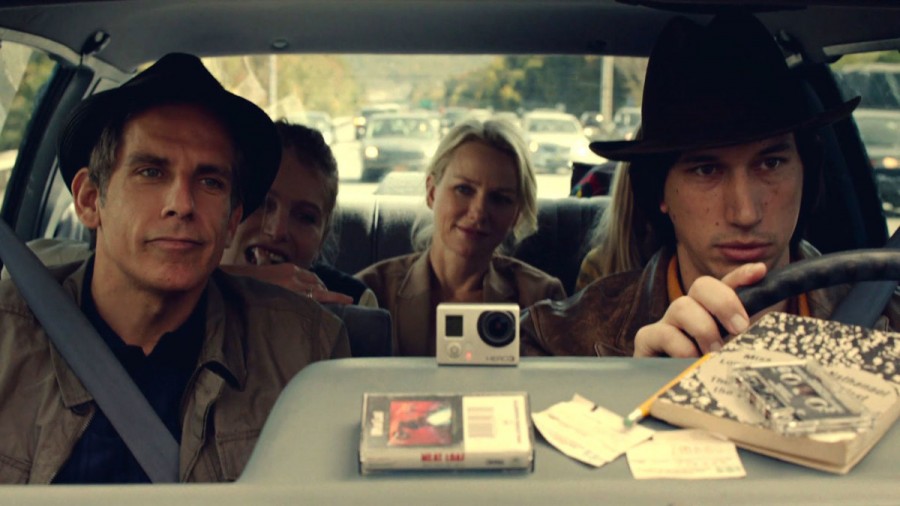
JJ came home the other night with a movie he “thought we’d both enjoy.” It included Ben Stiller, was called While You’re Young and had a sub-plot centered on getting older and having kids. What’s not to love?!

At :45 into the movie, we both hated it. It was slow, we got annoyed with characters, and our expectations were way off. This was not “Meet the Parents” Stiller. This was artsy Stiller (who, btw, shows the depth of his talent) but I was tired and unprepared for the mental work of a thinksy film. Also, there’s an entire scene full of puking and I hate vomit.

By the end, the film redeemed itself. The climax, truth-telling scene pushed me to the back of my seat in awe.

The storyline centered on a middle aged, childless couple who become friends with a young hipster couple in the wake of their best friendship being siderailed by a baby. The hipsters introduce them to other ways of living (“They make everything!” Stiller tries to explain to his SAHD friend) and become saturated with the idea of generosity.

The hipster dude is a budding filmmaker who seeks Stiller’s advice in making a documentary, and – in the spirit of generosity – Stiller helps him. He even offers resources. Along the way, Stiller’s father-in-law, a world renowned documentarian, also gets on board.

Then things get weird. (Enter: puking scene). Distrust for the hipster couple starts to grow. All of a sudden, we’re faced with the fact that not everything we know to be true about the hipster couple is, indeed, true. In fact, there are manipulations to the truth. When Stiller confronts the young filmmaker, he writes it off, appealing to the relativity of truth.

It turns out, the young hipster couple did not live a life of generosity because they believed in world made better by being generous. Generosity appealed to them because of the ways in which it made their life easier. They didn’t do the hard work of life and become generous with its fruits – they simply expected others to do so.

We see this in their approach to friendship. While they invested time into the Stiller couple, they did not do the hard work of honesty, vulnerability and truth-telling. They told the couple what the couple wanted to hear. They weren’t honest with their own beginnings and, in fact, entered into the relationship under false pretenses. But the older couple did do the work. They wrestled. They lost out on other friendships. They were vulnerable with the hipsters in sacred ways.

At the end of the movie, the hipster makes it big with his film. He edited the content in less than 24 hours and held a party/screening. Meanwhile, Stiller returns to sifting through his precious 6 hours of film, tasked with reducing it and maintaining the integrity of the story he wants to tell.

As a person who teeters between the two generations portrayed in the movie, I resonated with all characters at times and became struck with the honesty the movie laid out in front of us. (It was one of those movies that you think “ok, now I can go to bed” when it’s over, and then at 3am you wake up parsing through the subplots. You don’t do that? Oh, never mind. I don’t either.)

I personally spent the last few years intentionally trying to grow in the spirit of generosity. It resonates well with me. Truth-telling – another buzzword of the day – means something in my life. They are grounded in my understanding of God as the source of generosity and in our duty to reveal his nature.

This morning I read (from The Message translation) Matthew 7:13-14:

“Don’t look for shortcuts to God. The market is flooded with surefire, easygoing formulas for a successful life that can be practiced in your spare time. Don’t fall for that stuff, even though crowds of people do. The way to life—to God!—is vigorous and requires total attention.”

I couldn’t help but think of this young hipster couple and their approach to life. How simple it is to wave a flag of ideas like generosity and love and friendship without doing the hard work of weaving them into the fabric of our lives? This young couple wanted the world to live them out so that their own lives could be easier, not for the world to be better. In fact, I wonder if they believed that if their lives were easier than the world would be better. (Ironic, said by the woman who just whined and complained about school forms being an utter inconvenience, eh?)

Despite my highly aware eating habits, I’m not a hipster. I’m not cool. But I was born into an era of convenience – foods, entertainment, and lifestyles. The generation behind me has experienced it at a heightened level. With a change in pace comes effects on our life that I don’t believe have ever been calculated, and I believe they will hold great bearing on the way in which we practice our faith. I can identify and even sympathize with the challenges of accepting a faith that says it requires total attention and a lifetime of vigorous work. Who wants that? We want to do what we love and retire at 40. Following Jesus when it’s hard does not appeal. Loving people who don’t love us has little appeal when they’re mean. “Serving” becomes a noble concept, especially when we’re the ones served, but as another teacher once said, “We love the idea of being a servant until someone starts treating us like one.” Ouch.

At first I felt this movie played with the young generation’s approach and handling of the concept of truth. But for myself, it shed light into our human (not just youthful) propensity to gravitate toward what is easy over what is good. The bootstrap generations ahead of us might be shouting Amen behind me, but I’m not talking about the easy way of working hard for yourself and leaving the rest of the world to fend for itself.

Truly, this doesn’t come down to how many hours you spend at an office (or not) or if you expect people to make your life easy (or not). Life is much more than that. I believe that’s the idea behind Generosity, and more so, the Gospel. We give to the world not in relation with what we have but because we want the world to have it. Not because it’s owed to us.

« Older posts Newer posts »

© 2026 Michele Minehart

Theme by Anders NorenUp ↑